1 January 2026

|

Categories: Reflections

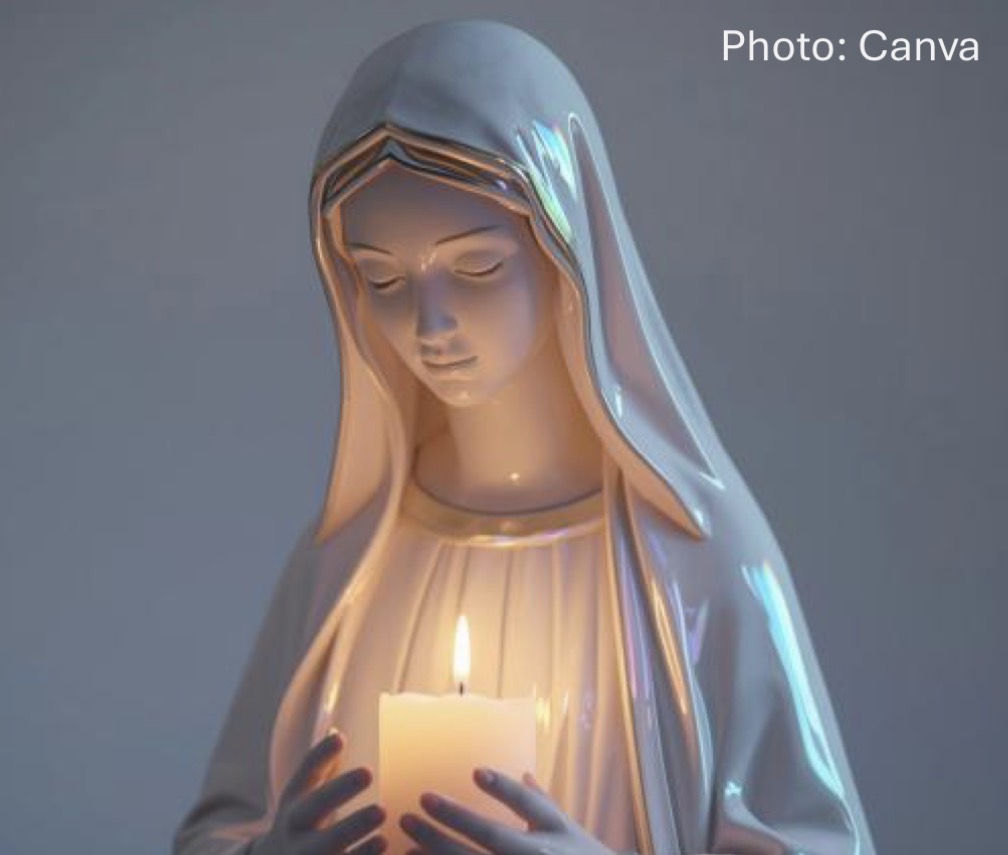
Mary responded, “I am the Lord’s servant. May everything you have said about me come true.”

(Luke 1:38)

Fiat is a Latin word which means “let it be done”. When the Angel announced that Mary had been chosen to bear the Son of God, there was a moment of hesitancy when she asked how it was possible. However, when the Angel told her the Holy Spirit would come over her and she would be a mother, she trusted wholeheartedly and joyfully accepted her call. In her Magnificat, Mary praised God for His mercy and love. She trusted in the providence and protection of God.

We certainly are nowhere near the holiness of Mary, yet we are called every day in our vocations as teachers.

We may think that our timetables and the classes we will teach this year have been planned by our HODs and school leaders. Do we trust that God had a hand in it—that we are where we are by the grace of God and not by chance? God knows us inside out. He knows our desires, our strengths and our weaknesses. He calls us to embrace the classes and responsibilities we have been given: the ones with the smartest children and the unmotivated children, the ones with the cooperative parents and the demanding parents. He calls us to seek the Jesus in each child and parent in our class.

At the beginning of the year, we may accept this challenge and truly seek to love our charges and fulfil our responsibilities with joy, but being human, we will find ourselves tiring and losing steam after some time. How can Mary’s fiat inspire us to respond to God’s call?

Mary praised God. We should too. We should make time for God in our daily routines—perhaps simply by making it a habit to praise and thank God when we wake up in the morning, or making a conscious effort to say grace before meals or a snack. In doing so, we acknowledge God’s presence in every moment of our day. We could also make some lifestyle changes to attend a couple of weekday Masses, which, as we know, is the highest form of praise and worship.

Mary pondered on God’s goodness; she did not overreact when she encountered moments of difficulty or challenges. We could remind ourselves of God’s mercy and love by placing a crucifix, a small statue, or a holy picture at our tables. When we come back from a challenging class, we have a physical reminder of God’s love for us. If we have had a fun and fulfilling lesson, we thank God for the experience. If a crucifix or symbol is not appropriate in secular schools, we can slip the Bible among our resources. The Word of God is a powerful tool and can speak to us in moments of need.

Mary was filled with joy. We should seek this heavenly joy, not just earthly happiness. Happiness may be a pile of marked assignments, a list of passes after a test, or a day when every child hands in his or her homework. Joy comes from God; joy is not something we can attain on our own. Joy is recognising that God is working in us and fulfilling the plans that He has for us.

God tells us in Jeremiah 29:11, “I know the plans I have for you …”

In moments of difficulty and despair, we can become disconnected from God, not because He has left us, but because we are filled with anger or anxiety. We need to remain alert to God’s work in our lives.

So, at the beginning of this school year, do we let go and let God? Can we be servants and allow what God has planned to be fulfilled in our lives?

May you be inspired by Mary’s fiat and move courageously and joyfully through this school year.

15 December 2025

|

Categories: Reflections

“I planted, Apollos watered, but God gave the growth.” (1 Cor 3:6)

“Thank you, Mr Chui, the consultations were useful!”

I have been in the business for more than a decade.

The students hope to get a good grade for History so that they can graduate well. I am reasonably confident as their teacher that it can happen. And it does.

I am grateful to the Lord that, at least for the subject I teach, I am a sturdy enough bridge. With my help, the students are often able to get their desired grade to set them on the next stage in post-secondary education.

Nevertheless, the trouble with being a bridge is that your “usefulness” is for a time. You cease to matter once the commuter finishes his journey.

I have come to accept this as part of the experience of an educator.

But I do ask if I can be something more.

Does the impact I make go beyond grades?

I got the answer this year on 30 June 2025.

It was from Brandon, who graduated in 2021. I had taught him History. He was not a Christian but attended Religious Moral Education lessons which I also taught.

He would sit quietly, and in deep thought during those lessons.

His WhatsApp message came as an unexpected delight for me.

“Hello, Mr Chui! Hope you remember me. I’ve been having some questions about Catholicism and would like to explore the faith further. Can we meet?”

I paused, filled with a deep sense of gratitude.

“Yes, I remember you! Let’s meet!”

And we did. And we spoke about his journey towards accepting Christ.

“What was your story, Brandon?”

“I had always wanted to experience what it means to love unconditionally. For a long time, I felt that my non-Christian friends are more sincere. At least they cared for me because of me. My Christian friends are probably caring for me to please God.”

“What was your turning point?” I asked.

“The turning point came when one of them explained to me that good works alone cannot make a Christian righteous; it is by God’s grace that we are justified.” (Eph 2:8–9)

My paradigm shifted. The good deeds I witnessed from my Christian friends were not done to make themselves righteous in God’s eyes, but rather were the result of their faith and regeneration in Jesus Christ. (2 Cor 5:17)

“I began to be intrigued by this Jesus and asked seriously if this story is true,” Brandon continued.

Brandon expressed his desire to explore becoming Catholic. He shared that he felt the fullness of Christianity might be found in Catholicism. I shared that I would be happy to be his guide.

As if the Lord wanted to confirm His initial answer, it happened again the following week.

It was homecoming on 9 July 2025, when Catholic High School was celebrating the 90th anniversary of her founding, with a food and funfair.

I got another cheery greeting from an ex-student.

“Hello, Mr Chui!”

I turned around and saw a face that I had not seen for some time. This time, it was Bo Yu.

I had taught him when he was in Secondary 3. Wasn’t he still in Louisiana?

“Oh Mr Chui, I have graduated and am back because I need to serve National Service. And by the way, I am hoping to become a Christian and am wondering if we could chat about this.”

I listened, in awe and gratitude, as Bo Yu shared his journey of how he came to accept Christ.

“Let’s meet again soon!” I added.

And so, we did. And when we met, we talked—about the nature of truth and love, purpose, relationships, and the person of Jesus Christ.

I was filled with gratitude.

Currently serving his Basic Military Training, Bo Yu shared that with Christ, even basic things fill him with gratitude.

“I am grateful for having healthy legs to feel pain, arms to feel weak.”

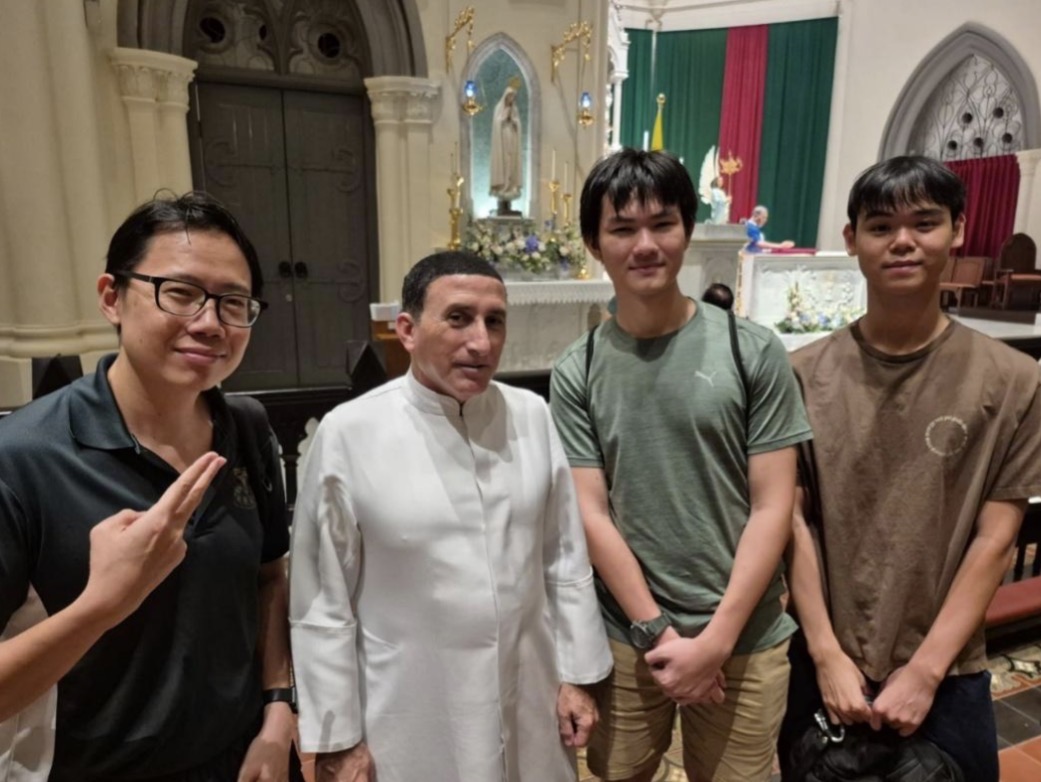
Both Bo Yu and Brandon are now attending the Rites of Christian Initiation of Adults (RCIA) at the Church of Saint Vincent de Paul. And I am their RCIA Sponsor.

I am no longer just a bridge, but with God’s grace, also a compass—helping ex-students navigate important decisions in their life.

On Fridays, we try to attend Mass at the Church of Saint Joseph, followed by an hour of Eucharistic adoration and subsequent fellowship with other Catholics.

One of those Fridays, Fr Joe Lopez—chaplain of Catholic High and rector of St Joseph’s Church—was the celebrant at Mass.

After Mass, we went up to him. He was beaming with pride.

I have known Fr Joe since I was an undergraduate, and his example has been a compass for me.

Fr Joe is a missionary who left his native country over 20 years ago to serve in a foreign land, to share the love of Christ with ordinary people like me. Today, I am a Catholic educator who shares my mission to help young men discern their own calling in life.

And with the Lord’s grace, we see the first fruits of the work the Lord has started.

I thank Brandon and Bo Yu for trusting the Lord. May He guide their steps as they seek Him every day.

In closing, I would like to offer this prayer from Saint John Henry Newman, whom Pope Leo XIV declared a Doctor of the Church on 1 November 2025, and co-patron of Catholic Education with Saint Thomas Aquinas.

Saint John Henry Newman wrote profoundly about the purpose of education, especially in his book The Idea of a University. For Newman, the purpose of education is to lead us to the truth of the world, the truth of God, and clarity about one’s mission in life.

I offer this prayer for all Catholic educators, that they may also be both sturdy bridges and sure compasses for those whom they teach.

“God has created me to do Him some definite service. He has committed some work to me which He has not committed to another. I have my mission. I may never know it in this life, but I shall be told it in the next. I am a link in a chain, a bond of connection between persons. He has not created me for naught. I shall do good; I shall do His work. I shall be an angel of peace, a preacher of truth in my own place, while not intending it, if I do but keep His commandments.

Therefore, I will trust Him. Whatever I am, I can never be thrown away. If I am in sickness, my sickness may serve Him; in perplexity, my perplexity may serve Him; if I am in sorrow, my sorrow may serve Him. He does nothing in vain. He knows what He is about. He may take away my friends. He may throw me among strangers. He may make me feel desolate, make my spirits sink, hide my future from me. Still, He knows what He is about.”

— Saint John Henry Newman


Photo: Nick Chui

1 December 2025

|

Categories: Reflections

We have just begun the first day of Advent, celebrating the end of another school year and ushering in the beginning of a new liturgical one.

Not long ago, on November 7, ACCS held its inaugural Catholic Education Summit (CES), gathering together representatives from all segments of a Catholic school – students, educators, school leaders and Board members – to reflect on the theme “On Your Marks!” referring to the Five Marks of a Catholic School advocated by the Holy See.

In his homily at the CES Mass, Fr Edward Seah said the theme reminded him of Sports Day in his schooldays where, before a race, the athletes waited for the commands “On your marks – get set – go!” to the excitement and anticipation of those watching from the stands. (In our local context, the command is rather “Ke garisan, sedia, [gunshot].”)

Fr Edward compared the runners’ single-mindedness and perseverance in reaching the finish line as fast as they could to Jesus’ journey from Galilee, setting his face steadfastly towards Jerusalem and Calvary. “He was very clear about his mission” not allowing anything to stand in his way, and “he lived out his mission” to the end. “What about us?” he asked.

On your Marks…

The order “On your marks”, in the plural, can be addressed to (i) all participating athletes who take the same ‘mark’ or starting line (as in contestants in a 100m race) or to (ii) individual athletes whose marks are different from their fellow competitors’ i.e. staggered (as in a 400m event).

Fr Edward’s question is timely for Advent. What exactly is our mission, our goal, collectively as a Catholic school community, and as individual educators?

As Catholics and people of God, we all run the same race, with the same starting line i.e. our baptism, by virtue of which we are all ‘enrolled’ in the same mission of Christ our King, and with his same goal.

St John Paul II said: “The ultimate goal of all Catholic education is salvation in Jesus Christ. Catholic educators effectively work for the coming of Christ’s Kingdom; this work includes transmitting clearly and in full the message of salvation, which elicits the response of faith.”¹ This is why “It is appropriate to speak of religious education as ‘the core of the core curriculum’… A principal goal of the Catholic school must be to hand on the faith.”² [italics his]

How we achieve this goal is through the Five Marks of a Catholic School i.e. our vision and mission is inspired by (i) God’s vision and mission; and hence (ii) how He sees each and every human person as created in His image and likeness with an inviolable and intrinsic human dignity; (iii) His desire for everyone to relate to one another in the loving communion of the Holy Trinity; (iv) seeing the world through His lens of mercy, delight and gratitude; and (v) our authentic joy of witnessing to the Gospel by testifying to God’s goodness in our lives.

But the extent to which we make our Five Marks on our students differs, depending on (i) the time we spend with them e.g. as flexi-adjuncts, form teachers or school leaders; (ii) the subjects we teach them e.g. religious education or more ‘secular’ subjects; (iii) our personalities and natural talents and skills, especially for active listening and dialogue; and (iv) our spirituality and depth of relationship with God.

In this sense then, our starting lines are staggered.

Get set…

After the athletes have taken their respective marks at their lines or starting blocks, the marshal cries, “Get set!”

This is the cue for athletes to assume their optimum physical position to launch themselves into their first crucial make-or-break-of-a-race steps, especially for sprinters. It is also the last chance to prepare mentally for what is about to come — the sound of the starting gun.

These precious seconds are an athlete’s last chance to dispel self-doubt and fear, and bring nerves under control — a momentary lapse can result in a false start, leading to disqualification for the athlete and even the team in a relay, and the loss of not only a race, but perhaps a championship.

“Get set!” is the time of active waiting and stilling oneself for the sound of the starting gun, the signal to “Go!”

“Get set!” reminds me of Advent. ‘Advent’ comes from the Latin adventus, meaning “a coming into place, view, or being; an arrival”. It is a time of glimpsing, and getting ready for, the coming of the Word made flesh to conquer hearts and souls for the Kingdom of God from whence He came.

Advent is a time to prepare to “Go!” on our shared mission with Christ to save souls. What should we do this Advent?

In their 2025–26 edition of the Office for New Evangelisation (ONE)’s Advent Reflection Booklet, Fr Terence Pereira, Episcopal Vicar for the New Evangelisation, gives us another secular metaphor to see Advent as a “get set” from our respective start lines for the “get go” of Christmas:

“If you notice, the prices of material things (food, clothing and housing) keep going up and up and never seem to come down. The rising cost of living is often driven by greed, the desire to have more. Our spiritual life should have the same trajectory (always rising) because this is asked of us when Jesus said, ‘Be perfect as your heavenly Father is perfect’ (Matt 5:48) The call to perfection is found in 1 Peter 1:16: ‘Be holy because I am holy’. … Our holiness, where we are at this stage of our lives, is the starting point.”³

This echoes St John Paul II’s call to Catholic educators: “Holiness is not the privilege of a few; it is a gift offered to all. The call to holiness is addressed also to you and to your students. To doubt this is to misjudge Christ’s intentions: for ‘each of us has received God’s favour in the measure in which Christ bestowed it.’ (Ephesians 4:7).”⁴ [italics his]

Advent is a time to work on our personal holiness.

‘Set’ in Christ

Behind every successful athlete is a great coach. Behind every good student is an inspiring teacher. Both prepare their charges, not merely for those all-too-short times during which they have to prove their mettle in a race or an examination, but also to build their character and fortitude for the arenas and classrooms of life.

But neither coaches nor teachers can effectively impart skills or knowledge they do not have in the first place. We cannot share Christ with others if we do not already have an existing relationship with Him. St John Paul II explains why this is so important for Catholic educators:

“Jesus shares with you his teaching ministry. Only in close communion with him can you respond adequately. This is my hope, this is my prayer: that you will be totally open to Christ, that He will give you an ever-greater love for your students and an ever-stronger commitment to your vocation as Catholic educators.” [italics his]

This makes Fr Terence’s exhortation very timely:

“During this time of Advent, we should remind ourselves: just as the prices are set to go up, my spiritual life is also set to go up. We should strive to be holier. We should strive to make that effort to journey to new, unknown places in our heart and spirit, places that will eventually bring us closer to the Lord.”

For, as St Paul wrote, the stakes are high:

“Do you not know that in a race the runners all compete, but only one receives the prize? Run in such a way that you may win it. Athletes exercise self-control in all things; they do it to receive a perishable wreath, but we an imperishable one. So I do not run aimlessly, nor do I box as though beating the air; but I punish my body and enslave it, so that after proclaiming to others I myself should not be disqualified.” (1 Corinthians 9:24–27)

Christ our coach

Traditionally, every Sunday of Advent, a candle is lit every week to symbolise the hope, peace, joy and love that Our Lord, the Light of the World, will bring when He comes at Christmas.

Perhaps this year, when we see the Advent candles being lit in our homes or in our churches, we could focus on the four “key elements” Pope Leo XIV outlined to educators on the Jubilee of the World of Education on Oct 31, 2025 which he considered “fundamental to Christian education” – interiority, unity, love and joy.⁵

• Interiority: The Pope explained, “It is a mistake to think that beautiful words or good classrooms, laboratories and libraries are enough to teach. These are only means and physical spaces, certainly useful, but the Teacher is within. Truth does not spread through sounds, walls and corridors, but in the profound encounter between people, without which any educational endeavour is doomed to fail… students need help to get in touch with their inner selves.” This presupposes that their teachers are in touch with their inner selves, and the Teacher who is Truth incarnate, within. Only if we know Him, can we share Him, and teach our students how to find Him within themselves.

• Unity: Leo’s Papal motto is In illo uno unum – “in the One, we are one.” To convince our students that Jesus is “The One”, Catholic educators must first witness to their ‘one-ness’ in Christ, with each other as “members [of the Body of Christ] united to the Head” and with their students as “companions on the journey of continuous learning in life.” They can only do this if they “de-centre” themselves “as a stimulus to grow” in unity.

• Love: “Sharing knowledge is not enough for teaching: love is needed,” said the Pope, for as St Augustine taught: “The love of God is the first commandment, the love of neighbour is the first practice.” He asked: “What efforts are we making to build bridges of dialogue and peace, even within teaching communities; what skills are we developing to overcome preconceptions or narrow views; what openness are we showing in co-learning processes; and what efforts are we making to meet and respond to the needs of the most fragile, poor and excluded?”

• Joy: “True teachers educate with a smile, and their goal is to awaken smiles in the depths of their students’ souls… the very joy of the educational process is a fully human engagement, a ‘flame to melt our souls together, and out of many to make but one.’ (St Augustine)”

Being grounded firmly in Christ our Head Coach in this way is critical, for both athletes and educators.

As St John Paul II reminded athletes participating in the World Athletics Championships in Rome, 1987:

“[You athletes are exposed to] considerable psychological pressures because people tend to extol you as heroes, as human models who inspire ideals of life and action, especially among youth… You are observed by many people and expected to be outstanding figures, not only during athletic competitions but also when you are off the sports field. You are asked to be examples of human virtue, apart from your accomplishments of physical strength and endurance… If sport is reduced to the cult of the human body, forgetting the primacy of the spirit, or if it were to hinder your moral and intellectual development, or result in your serving less than noble aims, then it would lose its true significance and, in the long run, it would become even harmful to your healthy and full growth as human persons.”

It is not difficult to see the parallels between athletics and Catholic education.

May our season of Advent and Christmastide this year draw us closer to Christ our King, Master Teacher, and Head Coach as we prepare to run together this marathon steeplechase of life as Catholic educators, steadfast and single-minded in setting our faces in unity, love and joy towards our final goal – the heavenly Jerusalem.

15 November 2025

|

Categories: Reflections

As we draw near to the end of the calendar year, we find ourselves in a season of preparation.

Many of us may already be winding down and preparing for year-end holidays with our families, while others may still be busy in school preparing for P1 orientations, or P6 and Sec 4 graduation and prize-giving ceremonies, and prom nights. Still others are preparing students for the ongoing O and A level exams.

Yet, how many of us are preparing for the start of the new liturgical year and the season of Advent—a time of preparation for the arrival of Christ, not only His First Coming as a newborn babe at Christmas, but also His Second Coming as the Lord of lords and King of kings in the end-times?

Why we should prepare for Advent

We seem to be more diligent in preparing for Lent than Advent – we plan quite early on what we’re going to fast from or what extra we’re going to do, which spiritual or corporal works of mercy we’re going to undertake, and to whom to give alms and how much. Church ministries also begin preparing for more meaningful Lenten events and spiritual reflections for parishioners.

Yet why are we less intentional about Advent? After all, as Fr Ignatius Yeo observed in a Catholic News article, “both seasons employ the use of purple vestments, have a ‘rose’ Sunday – Gaudete Sunday in Advent and Laetare Sunday in Lent – and eliminate the Gloria during Mass. Furthermore, both seasons lead up to an important solemnity of the Lord – Christmas and Easter respectively. This is why they are both sometimes identified as penitential seasons.”

However, as Fr Yeo pointed out, the difference between the two is that, while Lent is a season to join ourselves to Christ by our repentance, confession of sin, and participation in His redemptive sufferings, “our joyful Advent ‘penance’ is primarily focused on removing anything that blocks Jesus from entering our hearts at Christmas.”

Advent is rooted in the Latin adventus or “arrival”, which in turn derives from the Latin ad + venire, which means, essentially, “to come to” or “to come toward”.

Last year, the whole of Catholic Singapore, and many non-Catholics too, was abuzz with expectancy and excitement at the imminent arrival of Pope Francis, the successor of St Peter, and elaborate preparations were made accordingly. What more the preparations for the imminent arrival of the Christ, St Peter’s Master?

Indeed, the Church teaches, “The coming of God’s Son to earth is an event of such immensity that God willed to prepare for it over centuries.” (Catechism of the Catholic Church, CCC 522) “When the Church celebrates the liturgy of Advent each year, she makes present this ancient expectancy of the Messiah, for by sharing in the long preparation for the Saviour’s First Coming, the faithful renew their ardent desire for His Second Coming.” (CCC 524)

To prepare for Advent then, we should, like wise bridesmaids, stay spiritually awake, ensuring the lamps of our souls are filled with the “oil of gladness”, and the wicks of our consciences trimmed, so that upon the bridegroom’s arrival, the light of our faith will illuminate the Way for others to “arrive” with Him to the great wedding banquet in heaven (Matthew 25:1–13).

How we could prepare for Advent

Apart from buying materials to craft our Advent calendars, Advent wreaths, Jesse trees and Nativity scenes, let us remember American Catholic theologian Dr Scott Hahn’s wise counsel: “If we want to advance in the spiritual life, we should first retreat.”

A good way to prepare ourselves seriously to advance spiritually into Advent is to literally go on retreat. How so and why?

1. We find silence

Going on retreat means intentionally leaving the Martha in us for an extended duration and letting our Mary choose “the better part”.

We need to unlock our eyes from the different-sized screens of our mobiles (S), laptops (M), TVs (L), movie theatres (XL) and turn our gaze upon God in the Blessed Sacrament, in the holy (hardcopy) books of Scripture or in the great canvas of Creation.

We need to detach from our fast-paced, noise-polluted and rest-deprived daily routines to seek refuge in Christ in the solitude, stillness and silence of our hearts.

Perhaps we simply need the peace and quiet of a good night’s sleep: “It is in vain that you rise up early and go late to rest, eating the bread of anxious toil; for He gives sleep to His beloved.” (Psalm 127:2)

2. We are prepared for mission

“‘Come away to a deserted place all by yourselves and rest a while.’ For many were coming and going, and they had no leisure even to eat.” (Mark 6:31)

We obey the Lord by making a mini retreat every time we go to Mass: together with other members of the People of God, we exit the world to pray, listen to the Word of God, allow the Holy Spirit to fall upon us “like the dewfall” and touch Jesus in the Holy Eucharist.

We leave, sent on mission, to bring what we have just received – the real presence of Christ – into the secular world, as living proof through our love and witness that “The Kingdom of God is among you” (Luke 17:21).

But nemo dat non quod habet – no one can give what they do not have. Originally a legal maxim in commercial and property law, we can use it to illustrate how head knowledge of Christ is not enough – if we do not have heart knowledge of Christ as our Teacher, brother and friend, how can we share Him effectively with others?

How much more would going on an extended retreat prepare us to become better missionaries!

Moses was on Mount Sinai for 40 days and 40 nights preparing to receive the Ten Commandments before giving them to the people to prepare them for entry into the Promised Land.

John the Baptist spent all his life in the desert preparing to prepare the way for Christ.

Jesus spent 40 days and 40 nights in the desert to prepare for His preparation of the Apostles for the Great Commission.

Peter, James and John were on the Mount of the Transfiguration with Jesus to prepare them for the Passion and its aftermath (Matthew 17:1), and Paul spent a very intense three days and nights with the Lord in his temporary blindness to prepare for his apostleship to the Gentiles and his preparation of the converts to become the earliest Christians.

3. We attune ourselves to God’s will

Pope Francis teaches that God calls each of us to be saints. “Each saint is a mission, planned by the Father to reflect and embody, at a specific moment in history, a certain aspect of the Gospel.” (Gaudete et exsultate 19) Before we can be His saints, we must know His will and His mission for us.

The Lord’s voice may be difficult to distinguish in the cacophony of noise both within and without ourselves. God had to call Samuel several times before he could recognise God and respond “Speak Lord, your servant is listening,” and even then, only with the priest Eli’s guidance. The kings of Israel and Judah preferred to heed the voices of the world rather than that of God’s through the prophets. Judas was deaf to Jesus’ voice of love and mercy incarnate.

In retreats, the Lord aligns our spiritual antenna to His wavelength. Through His Word contemplated in private prayer, preached or spoken through spiritual directors, proclaimed in the beauty of creation, audible in the soft, gentle promptings of the Spirit (like Elijah on Mount Horeb in 1 Kings 19:11–12) or even when sleeping (like St Joseph in Matthew 1:20), God recalibrates our will to be in synchrony with His.

“Be still and know I am God” is why many faithful are drawn to silent retreats. Robert Cardinal Sarah wrote: “Nothing will make us discover God better than His silence inscribed in the centre of our being. If we do not cultivate this silence, how can we find Him?”

4. We are refilled with the Holy Spirit

In human warfare, when an army retreats, it is usually because it is in danger of being overwhelmed by its enemy.

Jesus retreated to lonely places when He was tired, grieving the death of St John the Baptist, or preparing for the Cross in the Garden of Gethsemane. In the Old Testament, Elijah retreated to Mount Horeb for 40 days and 40 nights after doing battle with evil Queen Jezebel’s prophets of Baal.

In much the same way, the life of discipleship today is often a seemingly endless battle against secularism and subjective moral ambiguity. Just as soldiers retreat in war to rest, regroup, wait for reinforcements and re-strategize, we too, like Jesus, need to “retreat” from the spiritual battlefield of the world to report to our Commander-in-Chief, receive new directions from Him, have our wounds tended to, and be refitted with the armour of God and re-armed with the gifts of the Holy Spirit (Ephesians 6:10–17).

Thus recharged and re-empowered, we can continue fighting the good fight (1 Timothy 6:12) which St Paul charged us to do “without spot or blame until the appearing of our Lord Jesus Christ, which God will bring about in His own time.” (1 Tim 6:14–16)

5. We never retreat alone

“Then God said, ‘Let us make humankind in our image, according to our likeness.’” (Genesis 1:26) We were created for Trinitarian communion.

The fruits of Pentecost Sunday were that 3,000 more believers were added to the fledgling Church. “They were continually devoting themselves to the apostles’ teaching, and to fellowship, to the breaking of bread and to prayer” (Acts 2). How the Church grew after that is His-tory.

Those of us who retreat to devote ourselves to contemplation of the Word and Church teaching, to receiving Holy Communion and to prayer, also find the opportunity to forge new friendships and draw closer to God and to one another through shared experiences and fellowship, and being on mission together thereafter.

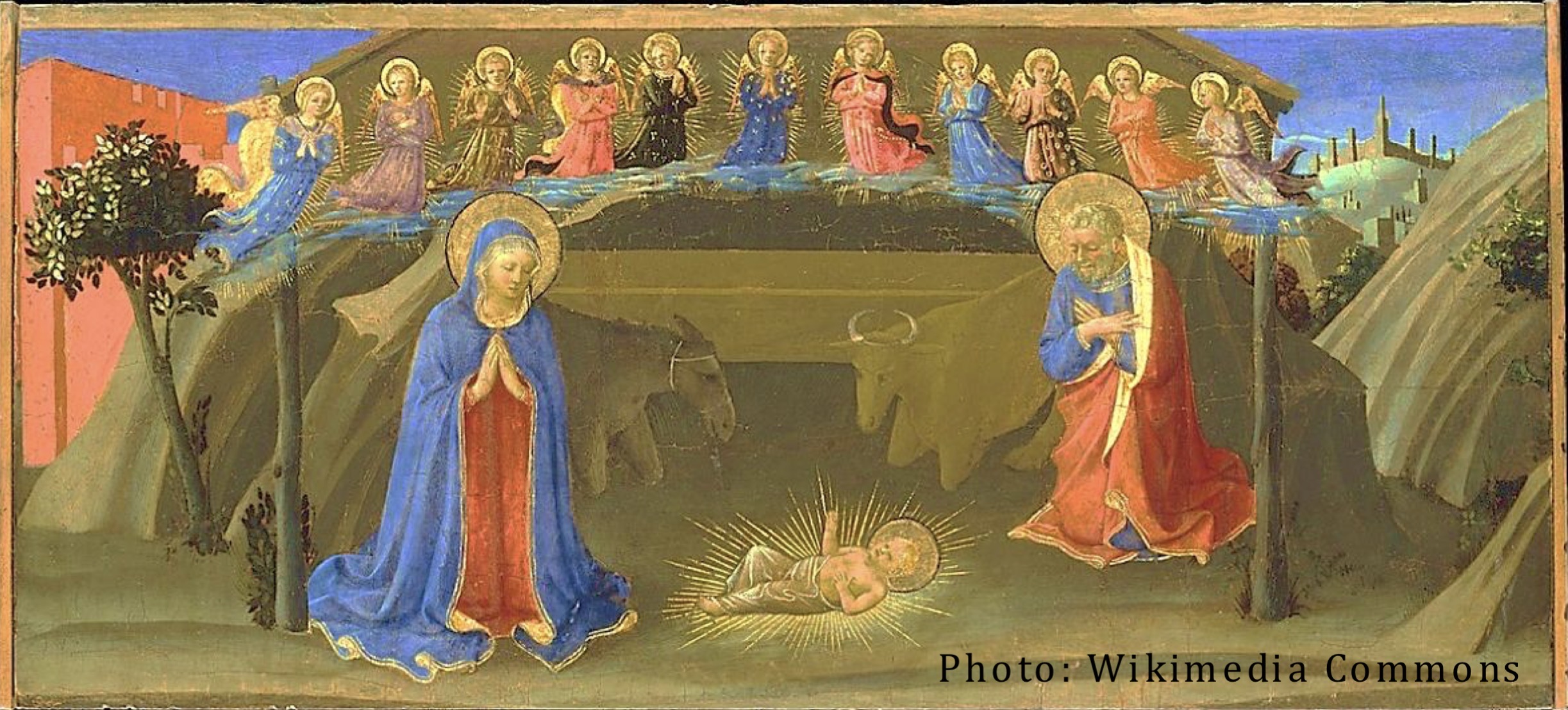
Remember that, during Advent, Mary, Joseph and Jesus in Mary’s womb were journeying as a family to Bethlehem in preparation for the Incarnation; and the Magi were on a joint pilgrimage towards the manger, preparing to do homage to the newborn King of the Jews. How they must have prepared for their respective long and hazardous journeys!

As Jesus would rhetorically ask later, “Suppose one of you wants to build a tower. Won’t you first sit down and estimate the cost to see if you have enough money to complete it?” And “Suppose a king is about to go to war against another king. Won’t he first sit down and consider whether he is able with ten thousand men to oppose the one coming against him with twenty thousand?” (Luke 14:28, 31).

As we must have told our students a thousand times, “Preparation is the key to success.” But do we practise what we preach? How will Christ the King find the state of our hearts at the end of the liturgical year?

Let us seriously consider making preparations for Advent and the Lord’s imminent arrival at Christmas one of our liturgical new year resolutions.

Adapted from an article first published in the 28 Nov 2021 issue of Catholic News.

To find out where and when any retreats or Days of Recollection are being held this Advent and throughout the year in Singapore, you may try inquiring with Archdiocesan Commission for Catholic Schools (ACCS), the Catholic Leadership Centre (CLC), the Catholic Spirituality Centre (CSC) or retreat centres such as Montfort Centre, Lifesprings Canossian Spirituality Centre, the Cenacle Mission Singapore, Kingsmead Centre, the FMM House of Prayer, San Damiano Franciscan Centre and La Salle House. Life Direction Singapore has links to all the above at: https://lifedirectionsingapore.sg/links/ There are also many retreat centres overseas.

1 November 2025

|

Categories: Reflections

Teenage life is definitely more stressful these days than a generation ago. In addition to dealing with the perennial issues that come with adolescence and the challenges of getting ahead in an ultra-competitive society like Singapore, today’s young people need to navigate the treacherous online world, which can easily mess with one’s mental well-being if one isn’t careful.

So how can teenagers make it through the secondary school years and come out not only unscathed but better and stronger? The solution is to give them the support that they need for their journey – and this is where Catholic schools come in.

Certainly, all schools provide their students with nurture and support, but Catholic schools offer something essential that secular schools don’t: God-experiences. From the physical environment to the school culture, Catholic schools offer their students daily opportunities to encounter God, and these encounters supply what they so desperately need in today’s world: an anchor and a compass.

Anchor for the Present

A hallmark of a Catholic school is the culture of prayer – prayer at various points of the school day and at major events, as well as regular Masses and paraliturgies. These moments are constant reminders that God is always present and that His care and providence are close at hand – and can be a source of strength and comfort in times of stress and anxiety.

When I was teaching at a Catholic school, I used to begin every lesson with a prayer, and my students would sometimes thank me for that – including non-Christians who felt privileged that their needs were prayed for even though they weren’t believers.

The daily habit of prayer also builds community and instils greater faith and trust in God. Thus, in a Catholic school, it wouldn’t be unusual for a sports team to attend morning Mass together on the day of a competition, or for a student to place a Rosary on his desk during an exam, or for students to spend quiet moments with God in the chapel or prayer room.

One beautiful incident I witnessed several years ago remains etched in my mind: when a student had been hospitalised, many of her friends – of various faiths – came together, sat in a big circle, and held hands to pray for her recovery.

As Pope Leo XIV told students gathered in Rome on 30 October 2025 for the Jubilee of the World of Education:

“You… have guiding stars: parents, teachers, priests and good friends, who are like compasses that help you not lose your way amid the ups and downs of life.”

Prayer and community in a Catholic school provide the stability and support that students need amid the turbulence of teenage life.

Compass for the Future

But Catholic schools do not just support their students in the present. They prepare them for the future too – and not just their adult lives, but eternal life. The emphasis is not just on being successful, but on being faithful – discerning God’s will for each person, using God’s gifts to serve society and the world, caring for the needs of those who are disadvantaged.

In this regard, the Religious Education lessons, Mass homilies and retreat talks that Catholic schools offer seek to relate to students’ lives and point them towards their true and ultimate goal: Heaven.

In that same address to students, the Holy Father remarked that behind the suffering that many experience today “lies a void created by a society that has forgotten how to form the spiritual dimension of the human person, focusing only on the technical, social or moral aspects of life.”

Catholic schools seek to fill that void, to nurture the interior life, and to remind their students: “Do not settle – you are made for something greater.”

The Natural Choice

Pope Leo concluded with these words:

“Dear friends, do not look to shooting stars, on which fragile wishes are entrusted. Look higher still, towards Jesus Christ, ‘the sun of righteousness’ (cf. Luke 1:78), who will always guide you along the paths of life.”

This is precisely what Catholic schools seek to lead their students to do, through the many God-experiences woven seamlessly into the rhythms of every school day – “a living environment in which the Christian vision permeates every discipline and every interaction”, as the Pope writes in his Apostolic Letter Drawing New Maps of Hope.

Shouldn’t studying in a Catholic secondary school therefore be the natural choice for Catholic teenagers?

16 October 2025

|

Categories: Reflections

(Adapted from her article first published in the 4 October 2020 issue of Catholic News)

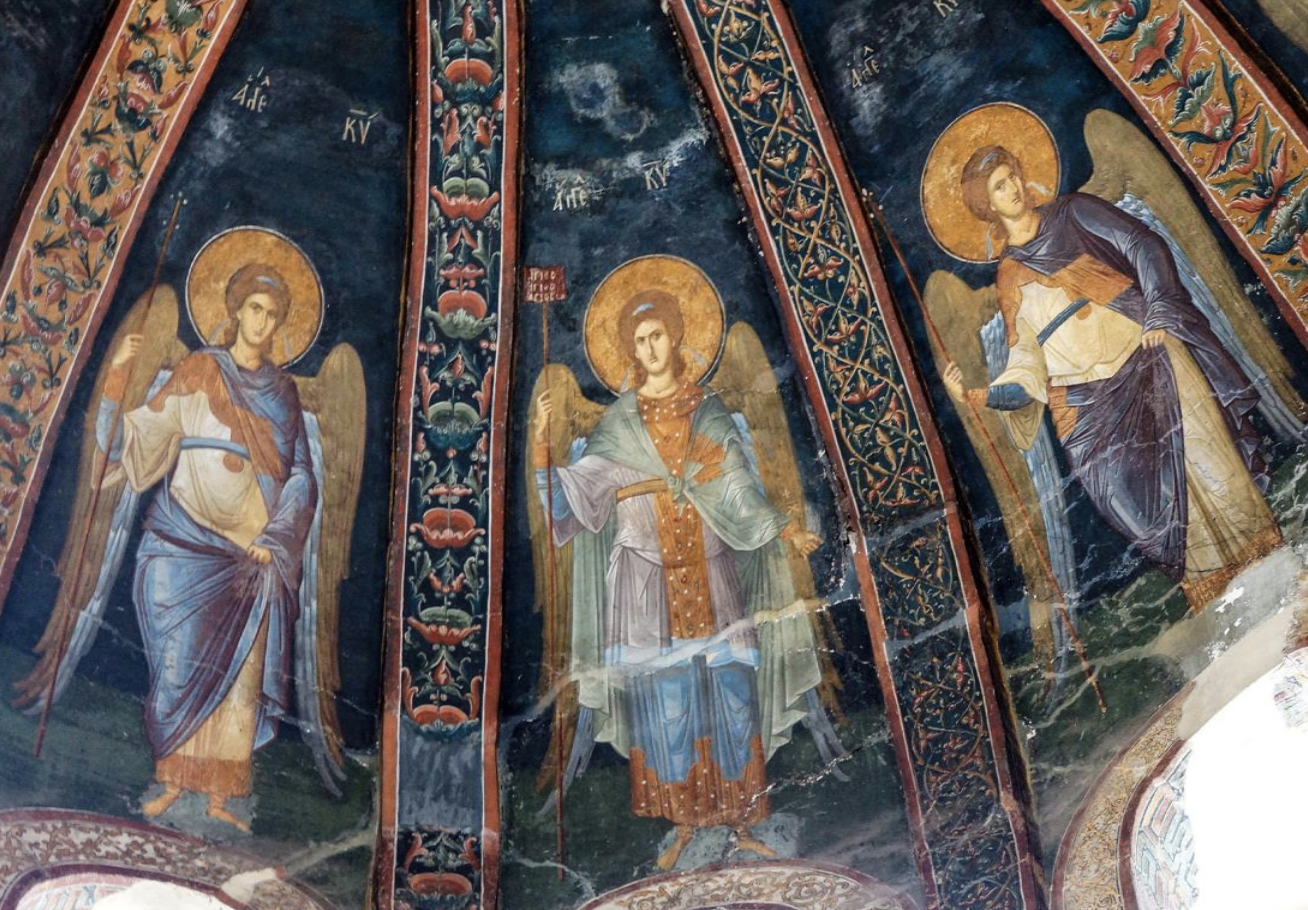
On Sept 29th we celebrated the Feast of the Archangels Michael (‘who is like God’), Gabriel (‘God is my strength’) and Raphael (‘God heals’), and October 2nd is the feast of our Holy Guardian Angels.

Angels are a gift from God; their existence a “truth of faith.” (Catechism of the Catholic Church, CCC 328) From birth to death, our lives are surrounded by the watchful care and intercession of angels. “Beside each believer stands an angel as protector and shepherd leading him to life.” (CCC 336)

Indeed, St. Jerome (whose feast day we just celebrated on Sept 30) said, “So valuable to heaven is the dignity of the human soul, that every member of the human race has a guardian angel from the moment the person begins to be.”

Who are they? St. Augustine explained that “these spiritual, non-corporeal beings that Sacred Scripture usually calls ‘angels’ is the name of their office, not of their nature. If you seek the name of their nature, it is ‘spirit’; if you seek the name of their office, it is ‘angel’: from what they are, ‘spirit’, from what they do, ‘angel’.” (CCC 328, 329)

In other words, angels are by nature pure spirit, while their office or function is that of God’s messenger (angelos in Greek) and intermediary.

As beings created by God, they too are creatures like us, but with a much higher calling. As St. Thomas Aquinas taught: “God is humanity’s universal teacher and guardian, but his teaching to humanity is mediated by angels.”

If Christ is the Teacher in God’s school of Creation, then aren’t we, as Catholic educators, called—like angels—to be messengers and intermediaries of God to every student He puts under our charge, especially those who are non-believers?

Like St. Michael, we are to equip our students to defend themselves in the battle against sin by teaching them Christian values and virtues, and by modelling them through example. Emulating St. Gabriel, we should bring Good News to the young people with our words of authentic praise, joy, affirmation, encouragement and gratitude. And we should imitate St. Raphael in accompanying those in our classrooms who are physically, emotionally or spiritually sick with our healing counsel—giving them the precious gifts of consolation, hope and peace, and above all, our time and presence when most needed.

At all times, we are called, like the guardian angels and the angelic hosts on Christmas night, to shepherd the sheep of our flock gently towards God with genuine love and joy.


How Can We Be Effective Angels to Others?

1. Be Close to God

Jesus said of little children, “Take care that you do not despise one of these little ones; for, I tell you, in heaven their angels continually see the face of my Father in heaven.” (Matthew 18:10)

Like the angels, we too must commune with God often—in prayer to ask Him for direction on how to minister to the young people in our lives, or to just sit in His presence, to give thanks and adore Him face-to-face.


2. Never Cease to Praise God

St. Hildegard of Bingen describes angels as “pure praise without any trace of a bodily deed.” The highest form of praise we can give God is when we gather with His People at Mass.

St. John Marie Vianney says we can learn from the angels how to present ourselves as a pleasing sacrifice to God: “With what humility should we assist at Mass, if we realised that our guardian angel was kneeling beside us, prostrate before the majesty of God! With what eagerness should we not ask him to offer our prayers to Jesus Christ!”


3. Be Humble Enough to Seek Help

St. Francis de Sales counsels: “Since God often sends us His inspirations by means of His angels, we ought frequently to offer Him our aspirations through the same channel—call on [angels] and honour them frequently, and ask their help in all your affairs, temporal as well as spiritual.”

If we genuinely want to be angels to others, especially in difficult situations, we must be humble enough to ask for the intercession of those who know best—the Archangels and our guardian angels—and seek the counsel of other human ‘angels’ who are more experienced or worldly-wise than ourselves, on how to handle the issues involved.


4. Be Prepared to ‘Wrestle’

More often than not, our message from God for our students (or colleagues!) will be a hard one. If they disagree or do not want to listen to us, we may have to engage them as did the angel with Jacob in Genesis 32:24–25!

We may need strength to persevere in consoling them, or helping them see and remove the obstacles in their lives, imitating the angel who ministered to Jesus during His agony in the Garden of Gethsemane (Luke 22:43) and the angel who rolled the stone away from the empty tomb at His resurrection (Matthew 28:2).


5. Beware of Pride

St. Augustine warned: “It was pride that changed angels into devils; it is humility that makes men as angels.” Satan was a fallen angel of light: he fell because he was jealous of us. Why?

According to Eastern Orthodox saint Gregory Palamas: “Although the angels are superior to us in many ways, yet in some respects they fall short of us, for we, rather than they, have been created in God’s image.”

Let us not fall into the same trap of envy and resentment, especially of others who seem to fulfil their angelic vocations better than us.


6. Preserve Our Purity

God appointed angels to keep Adam and Eve from returning to the Garden of Eden—not to punish, but to safeguard them from eating of the fruit of the Tree of Life and spiralling further downwards into disobedience and spiritual death. (Genesis 3:24)

God also commanded angels to be set on the Ark of the Covenant and later, in the Temple of Solomon, to protect the Holy of Holies within. (Exodus 25:18–20; 1 Kings 8:6–7)

In the same vein, if we are to fulfil our calling to be angels on earth to others, we must protect our hearts against sin and our bodies as temples of the Holy Spirit before we can safeguard those of our young charges.

St. John Bosco, who like many of the saints wrote from experience, taught: “When tempted, invoke your angel; he is more eager to help you than you are to be helped. Ignore the devil and do not be afraid of him: he trembles and flees at the sight of your guardian angel!”


7. Stay Close to Our Lady

Mary, Queen of Angels, is so titled because she is the Mother of God, who created the angels. Therefore, St. John of Damascene wrote, “When she became Mother of the Creator, she truly became Queen of every creature.”

As the Mother of the King of Kings, she is also Queen of Heaven, as we proclaim every time we pray the Fifth Glorious Mystery of the Rosary. As Queen of all Creation, she has supreme authority over all the angels, including Lucifer and his minions.

If we are to be genuine angels of the Light of Christ on earth, we must always honour Our Lady, and never be afraid to implore her help and prayers.


Catholic Educators: Angels of Our Catholic Schools

“Angel of God, my guardian dear,
to whom God’s love commits me here;
ever this day be at my side,
to light and guard, to rule and guide.”

Many of us were taught this little prayer in our childhood—and now we know why.

As Catholic educators, let us heed the call of St. Vincent Ferrer:
“Let us be like the holy angels now. If one day we are to be in the angelic court, we must learn now, while we are still here, the manners of the angels.”

Mary, Queen of Angels, pray for us!

Credits: Image from Canva

1 October 2025

|

Categories: Reflections

October is dedicated to the Holy Rosary, with the memorial of Our Lady of the Rosary celebrated on October 7th. This feast commemorates the Battle of Lepanto, where, against overwhelming odds, the Christian forces triumphed over the Ottomans. Their victory was attributed to the fervent praying of the Rosary on the eve of battle, which turned the tide in their favour.

Like the Christians at Lepanto, we too encounter situations that feel insurmountable—times when we are powerless to help our students, when efforts seem unreciprocated, and when we lament the erosion of Christian values and the decline in faith among those we serve. This month of the Rosary invites us to renew our devotion to Our Lady, trusting that in moments of helplessness, her intercession will carry us and those we pray for.

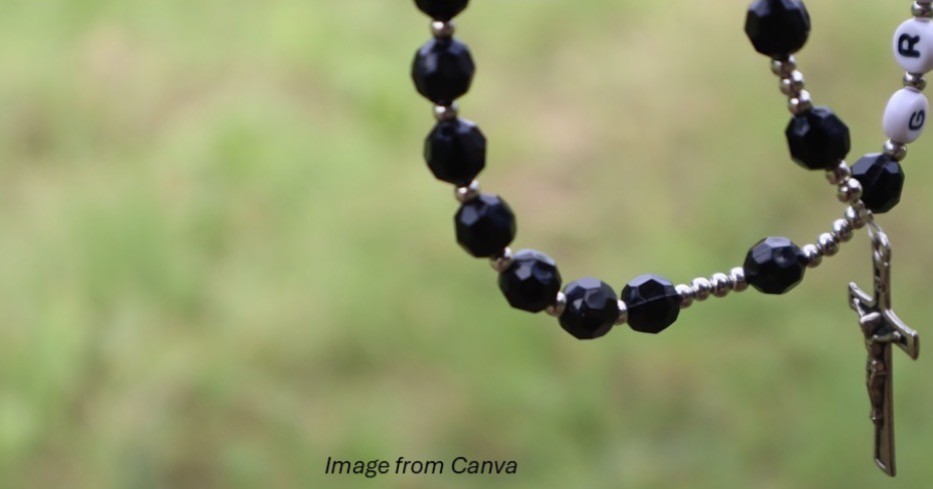
As a beginning teacher, I found invigilation tedious, as it took time away from more productive tasks like marking. Seeking to sanctify that time, I began praying the Rosary during exams, using a discreet ring rosary as I walked between rows, silently cheering on and interceding for my students. It not only made the time more meaningful, but also helped it pass more swiftly. Though I was powerless to assist them in any tangible way, I realised I could still help by entrusting them to prayer—offering what was beyond my control to God.

In our Catholic Schools, we are blessed to have the opportunity to pray the Hail Mary publicly. This month is a fitting opportunity to teach our students the meaning of those words—whom we are addressing, and why we seek her intercession. But before we can do that, we must ask ourselves: Who is Mary to me? The Latin maxim nemo dat quod non habet—“no one gives what they do not have”—reminds us that we cannot lead our students to a devotion we ourselves lack. We may know her titles—Mother of God, Immaculate Conception, Seat of Wisdom—but do we know her personally? Do we trust her maternal care?

St. Maximilian Kolbe once said, “Never be afraid of loving the Blessed Virgin too much. You can never love her more than Jesus did.” For us educators, Mary offers us a model of how to teach, guide, and love.

When Jesus was lost in the temple, Mary said gently but firmly: “My child, why have you done this to us? See how worried your father and I have been looking for you” (Lk 2:48). Her correction was rooted in love and concern. Likewise, our discipline must be just and compassionate, born of a genuine desire to educate, not driven by frustration or anger.

At the wedding at Cana, Mary observed the need—“They have no wine”—and instructed the servants, “Do whatever he tells you” (Jn 2:3, 5). Her words were simple, clear, and full of charity. As teachers, our daily task is to give instruction; Mary shows us how—with attentiveness, clarity, and love.

Pope St. Paul VI, in Evangelii Nuntiandi, reminds us that “modern man listens more willingly to witnesses than to teachers, and if he does listen to teachers, it is because they are witnesses.” Our students watch us closely. They notice whether we practise what we preach. To lead them to Mary, we must first imitate her—so that, through us, they may encounter Christ.

May this month be a time of renewal—of our love for Our Lady, our trust in her intercession, and our commitment to be witnesses who guide others to her Son.

Credits: Image from Canva

15 September 2025

|

Categories: Reflections

“The world is charged with the grandeur of God.
It will flame out, like shining from shook foil.”
(Fr Gerard Manley Hopkins, SJ)

The ecumenical Season of Creation—from Sept 1 to Oct 4, the feast day of St Francis of Assisi, the patron saint of the environment—is once more upon us, an annual reminder that Creation is a gift from God, and we, but its stewards.

This year is also the 10th anniversary of Pope Francis’ landmark encyclical Laudato ‘Si (On Care For Our Common Home): it is timely then, that we should ponder more deeply how valuable Creation is to humanity, not just as a physical resource which we have plundered for worldly progress and economic development, but a source of spiritual riches for integral human development.

As Catholic educators, have we ever wondered that, if Christ is our Master Teacher, then Creation could be the Divine School into which every person is automatically enrolled (no balloting required!) and nourished to be a lifelong learner?

After all, Creation bears the 5 Essential Marks of a Catholic School.

1. Inspired by a Supernatural Vision

A Catholic school is called to point students toward Jesus, who shows them the Way to their “transcendent destiny” in heaven. In the same way, Creation (which includes all living things, and man himself) directs our gaze to God.

Psalm 19:1 declares, “The heavens are telling the glory of God: and the firmament proclaims his handiwork.”

Customs and traditions the world over also reveal God in their own way. On a visit to Bali, I was told the spiritual meaning behind the oft-seen elegant bamboo penjor.

Its graceful arch symbolises Mount Agung, the abode of the gods, and reminds believers to bow low before them in humility, obeisance and gratitude.

The little shrines at the base of each penjor contain thanksgiving offerings of things growing under the ground (tapioca, cassava and other root vegetables), on its surface (rice, vegetables, flower blossoms) or above ground (coconut and other hanging fruits) in acknowledgement that all earth’s bounty are due to divine providence.

It was a beautiful reminder of what our response of faith should be to God’s infinite love for us i.e. “gratitude and gratuitiousness, a recognition that the world is God’s loving gift, and that we are called to quietly imitate His generosity in self-sacrifice and good works.” (Laudato ‘Si, LS 220)

“Each creature reflects something of God, and has a message to convey to us.” (LS 220). It is up to us to discover it.

2. Founded on a Christian Anthropology

Catholic education upholds the dignity of every human person, made in the image and likeness of God, his Creator. Therefore, Catholic schools seek to develop each child holistically, not just for responsible citizenship in the real world, but also for everlasting life as good and upright citizens of heaven, and ambassadors of Christ on earth.

As we have seen, Creation points to its Creator: “The universe unfolds in God, who fills it completely. Hence, there is a mystical meaning to be found in a leaf, in a mountain trail, in a dewdrop, in a poor person’s face.” (LS 12)

Nature has inspired such great heights of human creativity as St Francis of Assisi’s Canticle of the Sun, Milton’s Paradise Lost, Van Gogh’s Starry Nights and Sunflowers, Tchaikovsky’s Swan Lake, and Sir David Attenborough’s acclaimed television documentaries.

Shinkansen bullet trains were modelled after a kingfisher’s beak, and Velcro after the way the burrs on seeds cling to the fur of their animal dispersers. The structure of the Eiffel Tower is based on that of the human femur; the Beijing National Stadium, a bird’s nest.

Indeed, the Old Testament records parables like those of the Trees (Judges 9:7-21) and the Unfruitful Vineyard (Isaiah 5:1-6). And, as we know, Jesus Himself used many metaphors from nature to teach His disciples about the Kingdom of God.

If the mission of Catholic education forms souls for eternity, then nature reminds us that this world is not our final home—Creation is a signpost to the heavenly Jerusalem.

3. Animated by Communion and Community

A Catholic school is called to be a community of love, thriving together in the unity and communion of the Holy Trinity. St Francis of Assisi saw creation as a family, calling the sun ‘Brother’ and the moon ‘Sister’.

Just as Catholic education forms students to live in right relationship with God and others, so Creation herself teaches valuable lessons on solidarity with God, others and nature.

Ants and bees contribute to the common good of the nest and hive, working in harmony according to their various ‘charisms’ as workers, soldiers, drones and queens in their natural hierarchies.

Animals in migration, birds in murmuration and fish in schools move as one. Flora, fauna and the elements all interact with, and in interdependence on another as ecosystems weaving dynamic and intricate webs of life. Even our earth, sun, moon, and stars are just a part of the vast, cosmic ecosystem we call the universe.

Imitating nature’s unity in biodiversity, so too we should know and be content with our place in the Church, society and the world, striving together for the good of all, adapting and evolving to overcome any existential obstacles we may face. “Life, uh, finds a way.” (Michael Crichton, Jurassic Park)

Creation beckons us to cultivate “a loving awareness that we are not disconnected from the rest of the creatures, but joined in a splendid universal communion.” (LS 220)

4. Imbued with a Catholic Worldview

Catholic schools must foster love for wisdom and truth, and should integrate faith, culture and life with all knowledge.

“Catholic educators do not want their students to say, ‘We had the experience but missed the meaning,’” but rather, “to desire learning so much that he or she will delight in becoming a self-learner.” (The Holy See’s Teaching on Catholic Schools, pp 45-46)

When I was in Kenya on a mission trip and stopped by the highway for a break during a long drive, I snapped the photo below, wondering aloud why three donkeys were needed to pull the relatively small cart.

Our driver explained: “The middle donkey is an old hand, immune to the noise and chaos of the busy roads. The two donkeys on either side of it are ‘trainees’, still young, inexperienced, and easily spooked.”

He continued, “They are yoked together until the young ones learn from the older animal how to remain calm in the traffic; they will be given their own carts to pull only when they become mentally and physically strong enough to handle conditions on their own.”

It was such a beautiful metaphor for Jesus’ invitation to “Take my yoke upon you and learn from me; for I am gentle and humble in heart, and you will find rest for your souls. For my yoke is easy, and my burden is light.” (Matthew 11:29-30)

Lest we miss the wood for the trees, we Catholic educators must never stop being like little children ourselves—courageously curious, ever ready to ask, seek and knock, wherever we find ourselves, so as to receive, find and be opened in mind and heart to the presence of God and the Truth of His Word in the world around us.

5. Sustained by Gospel Witness

Catholic schools and educators are entrusted with informing, forming and transforming their students into evangelising and missionary disciples of Christ. Creation too proclaims the Gospel.

The cycle of the seasons—spring, summer, autumn, winter, spring—invite us to meditate on the incarnation, life, passion, death and resurrection of Christ.

The laws of physics and chemistry, and the mathematics in natural phenomena and living things, especially the marvel that is the human brain and body, convince us that all these must have taken shape not by mere chance, but by divine design.

Thus the Church declares that “God created the world, writing into it an order and a dynamism that human beings have no right to ignore.” (LS 220)

Indeed, Creation is sacramental: in the liturgy and the Sacraments—water, fire, oil and colour—are “taken up by God to become means of mediating supernatural life”, especially the Eucharist, where the bread and wine, the fruits of the earth, become Christ Himself offered as “food for His creatures.” (LS 235)

Since “the beauty of creation reflects the infinite beauty of the Creator, [it] ought to inspire the respect and submission of man’s intellect and will.” (Catechism of the Catholic Church, CCC 341)

Stepping into the Classrooms of Creation

“Some people, in order to discover God, read books. But there is a great book: the very appearance of created things. Look above you! Look below you! Note it. Read it.

God, whom you want to discover, never wrote that book with ink. Instead, He set before your eyes the things that He had made. Can you ask for a louder voice than that?

Why, heaven and earth shout to you: ‘God has made me!’”
(St Augustine)

St Augustine’s pivotal spiritual conversion took place after he heard God’s voice calling: “Take up and read! Take up and read!” Upon taking up the Bible and reading the Word of God, his relationship with God and fellow man changed profoundly.

Today, on the 10th anniversary of Laudato ‘Si, we are reminded to heed Pope Francis’ appeal for our own ‘ecological conversion’, realising that “living our vocation to be protectors of God’s handiwork is essential to a life of virtue: it is not an optional or secondary aspect of our Christian experience.” (LS 217)

God created everything with its own purpose. “None is superfluous.” (LS 84) Humanity was created with the purpose of stewarding Creation, but we have failed, through ignorance or indifference or downright evil.

Yet in this Jubilee Year, we are assured that there is still Hope, one that does not disappoint, because the love of God has been poured into our hearts through the Holy Spirit. (Romans 5:5)

“The entire universe speaks of God’s love, His boundless affection for us. Soil, water, mountain: everything is, as it were, a caress of God.” (LS 84)

God invites us this Season of Creation, and every season of our life, to step out into His School of Life, and to feel His loving embrace. He does not ask us to pay school fees, only to pay attention, and then, when we gain wisdom, to pay Him homage.

Let us not play truant any longer, but “Take up and read! Take up and read!” God’s great Book of Creation. May we ponder it with faith, wonder, and gratitude. And then teach our students to do the same.


Credits: Image from Quotefancy

1 September 2025

|

Categories: Reflections

If you are currently surrounded by towers of WA3 (Weighted Assessment 3) or preliminary exam scripts and administrative work, counting down to the end-of-year examination and semester break, and already besieged by plans which are underway for 2026, congratulations – you are definitely in the thick of Term 3, which is more likely to feel like Term 30 at this point. Something about school life makes our thinking and behaviour operational and survival-centred more than we would like to admit; what is inspirational and drives motivation to flourish takes a backseat. Yet education ought not to be about survival. On another note, the dogged determination to check off a long list of goals and targets calls us to question if education ought to be only about achievement and success. So, what are we neglecting in the routine but dangerous pursuit of completing the term and school year with as many notches in the belt as possible, but at our young people’s expense, and at the expense of the true purpose of education?

What benefits do young people reap from school activities and experiences that are carried out in survival mode and/or for success? I have lost count of the number of times my students have looked at me wearily – clutching the latest assignment from the Ten Year Series which is filled with more crosses than ticks – but still earnestly persevering to “improve”. I am equal parts proud of them for their resilience yet cannot help but feel so sorry for them and how tired and burdened they must feel, juggling the weight and expectations of society and stakeholders, including of their own. Is this what it means to honour the dignity of a child? If the purpose of education is to develop the young person in their best interest, in what way is it helpful or effective when we do more? The month of September begins with Teachers’ Day celebrations and as we enjoy the tokens of appreciation and affirmation from the young people we spend so much time with, it seems as good a time as any to consider: what does care for our young people and their best interest really look like; how can we show care with intention; and on a fundamental level, what are these best interests?

With the belief that excelling is important, society has conditioned us to reach for these common definitions and indicators of success: academic excellence, career progression, material acquisitions… But the pursuit of success in today’s landscape is a disquieting consequence of our fixation on meritocracy, which Michael Sandel (in his book The Tyranny of Merit: What’s Become of the Common Good) argues has steered us further away from what actually contributes to the common good. What he calls the “rhetoric of rising” – an emphasis on individual effort and achievement, and a sense of deserving-ness which ultimately leads to hubris and a disregard for systemic inequalities – also creates a great deal of stress and entitlement, while dangerously influencing our young people to believe that success must look a certain way. What is even more troubling is how meritocracy has undermined the dignity of the human person and work. Education can indeed help our young people succeed and excel, but at what cost?

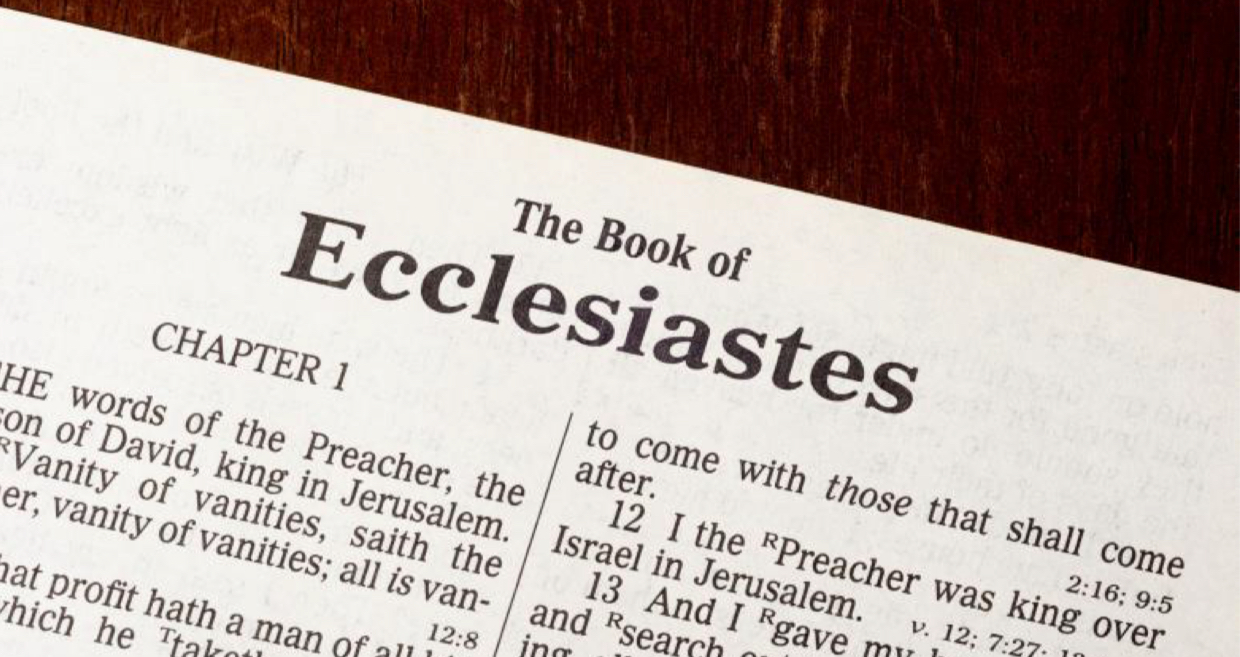
Think about what we find disturbing about the state of the world today: exploitative behaviours on those who are already disadvantaged and marginalised; socioeconomic and mental health issues that evolve in disturbingly unimaginable ways; chasing technology that progressively destroys the planet and erodes our humanity… the list goes on. Catholic education aims to teach young people to respect the dignity of the human person and to care for the common good. Yet at its heart, Catholic education also practices what it preaches, in the way that it respects the dignity of the human person and cares for the common good. At Sunday Mass recently, the first reading from Ecclesiastes 1 seemed to me a fitting verse for the September Sowers theme:

“Vanity of vanities, says the Preacher, vanity of vanities! All is vanity. What does man gain by all the toil at which he toils under the sun? A generation goes, and a generation comes, but the earth remains forever…”

Our achievements, possessions, and accumulations are fleeting and of the world; none are as precious and fulfilling if they are not centred on God. Do our actions and attitudes harm the planet and our fellow human beings, or do they protect our common home – and our only home — and give life to others? What values does the Catholic faith teach that enables us not just to succeed as an individual, but to flourish together with others? As Catholic educators, how do we role-model what we want our students to demonstrate? If we chase excellent academic results, won’t they do the same? If we persist in using AI for work under the guise of saving time, dare we hope that our students become skilled and discerning communicators themselves?

Were we to have the prescience to know every single implication of today’s actions on the future, what would we learn, relearn, unlearn, do and undo? One way to help young people care more for the common good is through an interdisciplinary curriculum, where the Arts and Humanities are integrated into Science, Technology, Engineering, and Mathematics (hence, STEAM). The holistic perspective and understanding developed in an interdisciplinary curriculum would foster empathy, social awareness, as well as a deeper humility and responsibility for our planet and its inhabitants. In turn, this sense of belonging and community strengthens their care for the common good and purpose, redefining what it means to safeguard and work towards people’s “best interests”. And how else can our young people be living testimonies of Catholic education if not through the gifts and fruits they bear – peace and joy under any circumstance instead of anxiety and a desire for more; goodness, with the courage to choose to do the right and good thing; love of God and neighbour, honouring God’s creation through their values and actions; amongst others. Teaching our young people to fix their eyes on God – and honour Him – is perhaps the single most powerful thing we can do for them as Catholic educators.

It is indeed complex to hold so much tension in education. Educating young people can sometimes be an exercise in conflict management, both external – across stakeholders’ desired outcomes – and internal, when we grapple between what we must do and what we want to do for the young person. Yet reconciling practice with what we believe in our heart of hearts to be good for our students is also our call to wisdom and to live out God’s enduring truth for teachers: to keep sowing seeds and producing fruit that enriches His creation.


Credits: Image from Canva Pro

16 August 2025

|

Categories: Reflections

In today’s fast-paced and digitized world, hours, days and even years seem to whiz by. Oftentimes, in the busyness of life where we interface with machines more than human persons, we may have unintentionally let meaningful moments with God and others slip away unnoticed.

This is where the celebration of milestones and anniversaries can serve to be intentional pauses in our everyday routines to stop, still ourselves and spend precious time recalling significant moments and people in our personal or professional lives, or landmark events in history which have impacted the way we live, and of course, to see the Lord’s grace and blessing in all of these.


Origin
In the Bible, when Abram obeyed God’s command to leave his homeland and go “to a land I will show you” (Genesis 12:1), he built an altar when he finally arrived in Canaan, and at various significant stages of his journey thereafter (Genesis 12:7-8, 13:18). Similarly, Isaac built an altar to God in honour of his divine promise of countless descendants (Genesis 26:25); Jacob too set up a memorial after his dream of angels ascending and descending the stairway to heaven (Genesis 28:18); and Joshua erected 12 stones by the banks of the Jordan as a memorial for the people of Israel of their miraculous crossing into the Promised Land after the parting of the waters of the river (Joshua 4:1-9).

Modern-day milestones can be traced back to the ancient Romans who used markers called milliarium along the extensive road systems they built. Placed at intervals of one Roman mile – mille passuum or ‘a thousand paces’ – these milestones helped soldiers, traders and administrative officials track their progress and locate each other on the roads.

Indeed, having just completed the Camino de Santiago, every distance marker on the Way was an assurance that I was another kilometre nearer to my destination in Compostela, the resting place of St. James the Apostle. A common refrain in the Camino is “Ultreia y suseia!” – literally ‘forwards and upwards’ – “Keep going, you can do it!” Milestones thus remind us, not only of how far we have to go, but also of how far we have come. As any young man who has made it through National Service would surely agree, they serve as checkpoints on our earthly pilgrimage, allowing us to acknowledge growth, resilience, and perseverance in having made it thus far.


Personal and historical milestones
Birthdays are occasions for the celebration of life. A baby’s one-month anniversary is a matter of routine – even an obligation – for many young parents, but in circumstances of low infant mortality, this milestone would truly be one of joy and hope. In an era where human life is considered cheap, birthdays – whether celebrated or not – are proof of a human person’s ability to survive, adapt, overcome, and thrive.

In today’s throwaway culture, where love, like life, can also be discarded on a whim, wedding anniversaries honour perseverance, compromise, sacrifice and a love that stands the test of time. Similarly, work anniversaries and career milestones honour the dignity of a person by giving him his due. Celebrating these moments highlights the person’s value to an organisation, boosting morale and self-worth, and motivating continued dedication to contributing to the common good of all.

On the other hand, the anniversaries of a loved one’s passing may be bittersweet. For one still grieving, it can be a day of sorrow, guilt and regret. Yet lighting a candle, visiting a grave or columbarium, or holding a memorial mass or service is a moment of connection, offering us a place for remembrance, reflection, and ultimately, healing.

Historical anniversaries are also bridges spanning the passage of time, inviting recollection of the past, introspection on the present, and inspiration for the future. Celebrations like SG60 – Singapore’s 60th year of independence – not only bind all Singaporeans together to a collective history and a shared past, but also acknowledge lessons learnt from these, and the progress made and still needed. They foster unity, educate future generations, and generate sentiments of pride, gratitude, loyalty and solidarity.

Let us reflect: Can we recall the date of our baptism, our spiritual birthday? Are we aware that our marriages are sacraments of which we, the spouses are the ministers? Do we realise that, in honouring work anniversaries and career milestones, we are living out the principles of Catholic social teaching? Do we believe there is life and hope for our loved ones after death? Are we still convicted, despite all we see around us, that humanity is intrinsically good, made in the image and likeness of God its creator, who is in control of all history?


Sacred milestones
Every Sunday is a spiritual milestone celebrating Christ’s salvation of the world through his passion, death and resurrection. Saints’ feast days honour their exemplary holiness, remember their sacrifices or martyrdom, and seek their intercession – contemplating their lives in witness to the faith renews and reinvigorates our own.

Other milestone anniversaries this year remind us of key Catholic theological and social teachings.

2025 marks the 1,700th anniversary of the Council of Nicaea, which in 325AD refuted the heresy of Arianism which basically taught ‘Jesus Christ, yes – Son of God, no.’ According to Arianism, Jesus was merely an intermediary of God. The Council of Nicaea firmly declared ‘Jesus Christ, yes – Son of God, yes.’

Although the Church recites the Nicene Creed every Sunday, doubt that Christ was indeed more than just another great holy man is growing. “Revitalising the confession of Jesus Christ — to learn once more to see him in all his greatness and beauty — is an urgent task of our time, one that must be undertaken in ecumenical fellowship.” (Cardinal Kurt Koch, Prefect of the Dicastery for Promoting Christian Unity). This historic milestone invites us to examine our own beliefs and calls us to action to work for unity, not just among Christians, but with all of different beliefs.

Of the 10th anniversary of Laudato si’, Pope Francis’ landmark encyclical on care for our common home, Cardinal Michael Czerny, Prefect of Dicastery for Promoting Human Integral Development, exhorted in a recent interview: “In the context of the Jubilee of Hope 2025, this tenth anniversary will be a time to celebrate what has been achieved and to give thanks to God. A time to promote the encyclical among Catholics and people of all faiths who do not know it. A time to mourn – and struggle – with those who suffer, marginalised or impoverished, because of the damage inflicted on the Earth and unjust economic mechanisms.”

Not so well known is that 2025 is also the 30th anniversary of Evangelium Vitae, St. John Paul II’s encyclical on the value and inviolability of human life, denouncing abortion and euthanasia and the ‘culture of death’. For this occasion, the Dicastery for Laity, Family and Life published a Pastoral Framework calling on all faithful, “in a time marked by extremely serious violations of human dignity, with many countries afflicted by wars and all sorts of violence – especially against women, children before and after birth, adolescents, people with disabilities, the elderly, the poor and migrants,” to continue respecting, safeguarding and defending every human life.

Closer to our hearts, many Catholic schools are celebrating milestone anniversaries in 2025. And as a matter of course, all Catholic schools celebrate their founders’ days every year.

Let us reflect: Are these just opportunities for us to have a big party and raise funds, or events to be participated in out of mere obligation, or dates on a calendar that are passed over with indifference? Or do we grasp the moment to seriously strengthen and build new bonds of communion among current staff, students and alumni, and to collectively ponder upon what might be required to remain committed to continuing our founders’ legacy in the face of new challenges and changing signs of the times? What do Church milestones really mean to us, if they mean anything at all, and what should we then do?


Gratitude
As we pass the halfway mark of the year, perhaps we, as Catholics, could pause and take a moment to ask ourselves: Where and when on our life journey should we have put up altars, memorials or spiritual “stones” to mark God’s hand on our hearts and in our minds?

If we have difficulty answering this question, perhaps now would be a good time to start looking back at our lives thus far, and to thank Him for what He has done for us throughout.

As popular American priest and speaker Fr Mike Schmitz taught in one of his YouTube videos, we should try our best to:

  • Notice and be aware of what is happening to, or around, us.
  • Take note of its source – does it come from God or not?
  • If it is from God, to acknowledge, affirm, appreciate His goodness and watchful care for us.
  • Announce it – testify or tell others about it, helping others to see God’s loving hand in their lives too.

Gratitude, thankfulness, thanksgiving and praise should undergird every and any milestone or anniversary. After all, it is only good manners, especially if we anticipate asking God for more help in the future.

“Rejoice always, pray without ceasing, give thanks in all circumstances; for this is the will of God in Christ Jesus for you.” (1 Thessalonians 5:16-18)

As legendary Indian cricketer Sachin Tendulkar described it: “Success is a process… During that journey sometimes there are stones thrown at you, but you just convert them into milestones.”

As Catholic educators, let us therefore help our students turn the ‘stones’ life throws at them into milestones, recognising their steps forward no matter how small or unsteady, acknowledging them, and affirming them for their effort. May we teach our young people how to harness the purpose and power of anniversaries and to see them as God-given stepping stones towards being better versions of themselves.


Credits: Image from smilemoney.com