“Get set” to “Go” this Advent by Michelle Tan
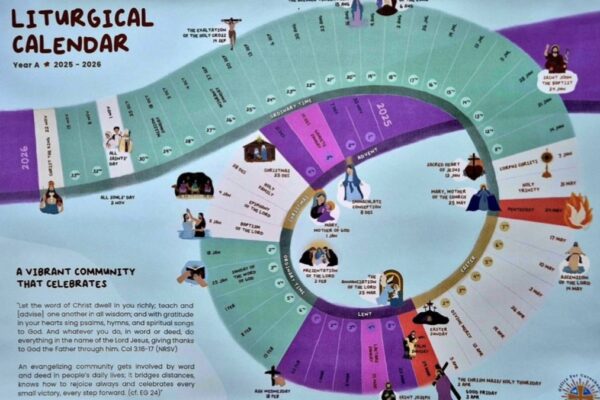
We have just begun the first day of Advent, celebrating the end of another school year and ushering in the beginning of a new liturgical one.
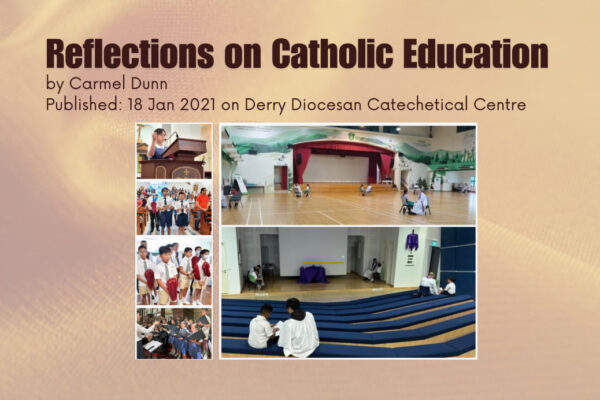
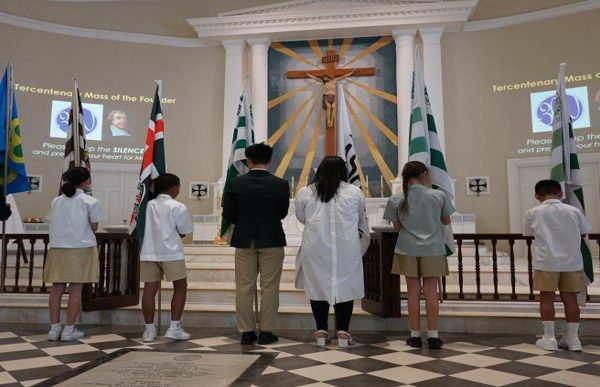
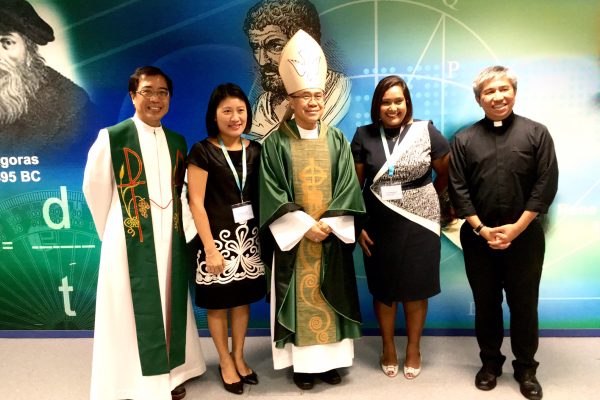
Not long ago, on November 7, ACCS held its inaugural Catholic Education Summit (CES), gathering together representatives from all segments of a Catholic school – students, educators, school leaders and Board members – to reflect on the theme “On Your Marks!” referring to the Five Marks of a Catholic School advocated by the Holy See.
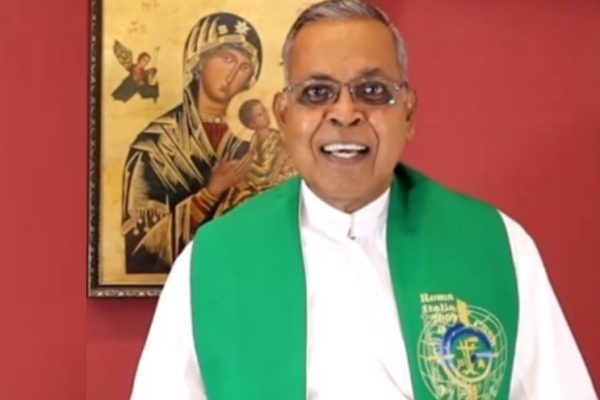
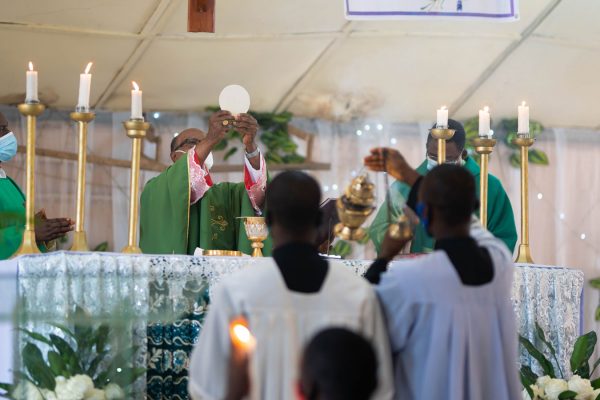
In his homily at the CES Mass, Fr Edward Seah said the theme reminded him of Sports Day in his schooldays where, before a race, the athletes waited for the commands “On your marks – get set – go!” to the excitement and anticipation of those watching from the stands. (In our local context, the command is rather “Ke garisan, sedia, [gunshot].”)
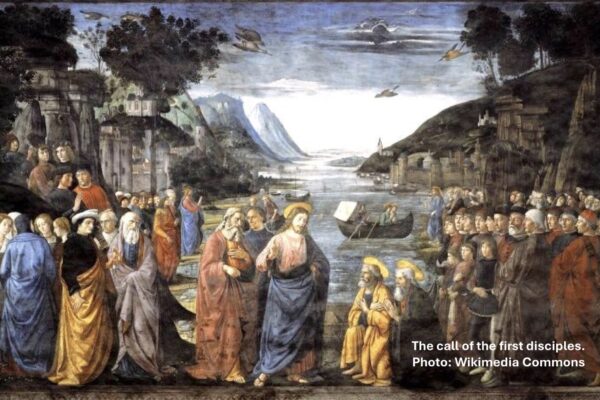
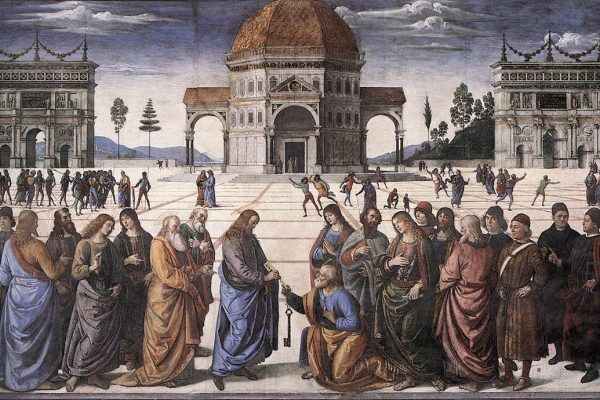
Fr Edward compared the runners’ single-mindedness and perseverance in reaching the finish line as fast as they could to Jesus’ journey from Galilee, setting his face steadfastly towards Jerusalem and Calvary. “He was very clear about his mission” not allowing anything to stand in his way, and “he lived out his mission” to the end. “What about us?” he asked.
On your Marks…
The order “On your marks”, in the plural, can be addressed to (i) all participating athletes who take the same ‘mark’ or starting line (as in contestants in a 100m race) or to (ii) individual athletes whose marks are different from their fellow competitors’ i.e. staggered (as in a 400m event).
Fr Edward’s question is timely for Advent. What exactly is our mission, our goal, collectively as a Catholic school community, and as individual educators?
As Catholics and people of God, we all run the same race, with the same starting line i.e. our baptism, by virtue of which we are all ‘enrolled’ in the same mission of Christ our King, and with his same goal.
St John Paul II said: “The ultimate goal of all Catholic education is salvation in Jesus Christ. Catholic educators effectively work for the coming of Christ’s Kingdom; this work includes transmitting clearly and in full the message of salvation, which elicits the response of faith.”¹ This is why “It is appropriate to speak of religious education as ‘the core of the core curriculum’… A principal goal of the Catholic school must be to hand on the faith.”² [italics his]
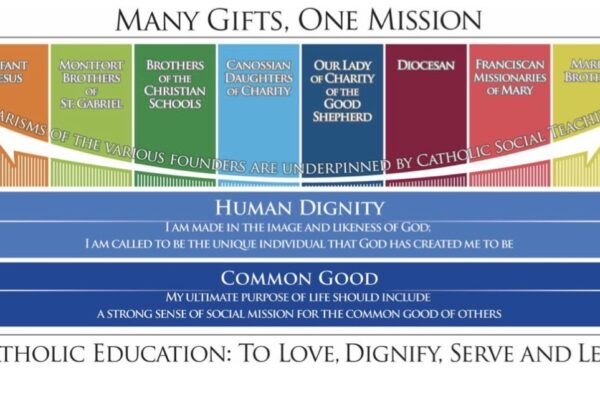
How we achieve this goal is through the Five Marks of a Catholic School i.e. our vision and mission is inspired by (i) God’s vision and mission; and hence (ii) how He sees each and every human person as created in His image and likeness with an inviolable and intrinsic human dignity; (iii) His desire for everyone to relate to one another in the loving communion of the Holy Trinity; (iv) seeing the world through His lens of mercy, delight and gratitude; and (v) our authentic joy of witnessing to the Gospel by testifying to God’s goodness in our lives.
But the extent to which we make our Five Marks on our students differs, depending on (i) the time we spend with them e.g. as flexi-adjuncts, form teachers or school leaders; (ii) the subjects we teach them e.g. religious education or more ‘secular’ subjects; (iii) our personalities and natural talents and skills, especially for active listening and dialogue; and (iv) our spirituality and depth of relationship with God.
In this sense then, our starting lines are staggered.
Get set…
After the athletes have taken their respective marks at their lines or starting blocks, the marshal cries, “Get set!”
This is the cue for athletes to assume their optimum physical position to launch themselves into their first crucial make-or-break-of-a-race steps, especially for sprinters. It is also the last chance to prepare mentally for what is about to come — the sound of the starting gun.
These precious seconds are an athlete’s last chance to dispel self-doubt and fear, and bring nerves under control — a momentary lapse can result in a false start, leading to disqualification for the athlete and even the team in a relay, and the loss of not only a race, but perhaps a championship.
“Get set!” is the time of active waiting and stilling oneself for the sound of the starting gun, the signal to “Go!”
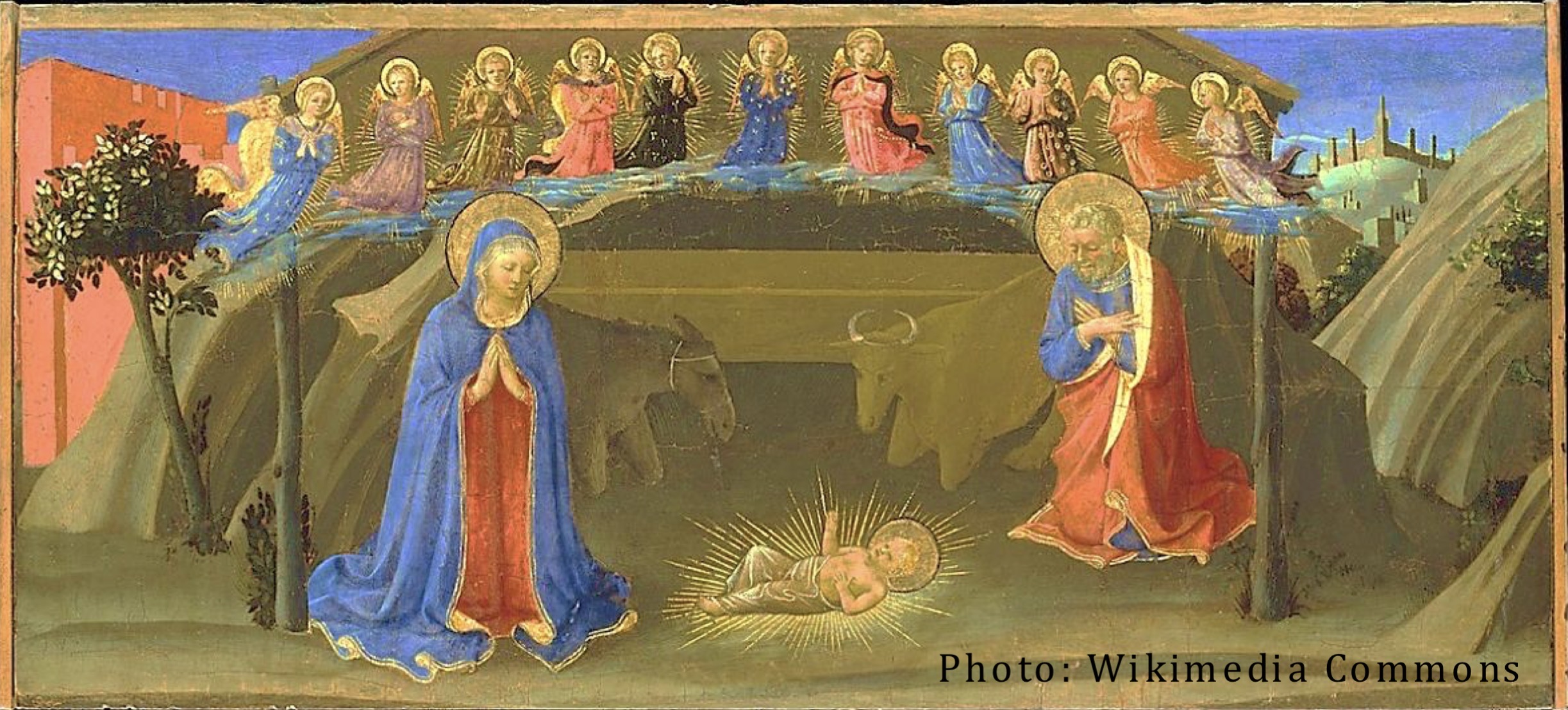
“Get set!” reminds me of Advent. ‘Advent’ comes from the Latin adventus, meaning “a coming into place, view, or being; an arrival”. It is a time of glimpsing, and getting ready for, the coming of the Word made flesh to conquer hearts and souls for the Kingdom of God from whence He came.
Advent is a time to prepare to “Go!” on our shared mission with Christ to save souls. What should we do this Advent?
In their 2025–26 edition of the Office for New Evangelisation (ONE)’s Advent Reflection Booklet, Fr Terence Pereira, Episcopal Vicar for the New Evangelisation, gives us another secular metaphor to see Advent as a “get set” from our respective start lines for the “get go” of Christmas:
“If you notice, the prices of material things (food, clothing and housing) keep going up and up and never seem to come down. The rising cost of living is often driven by greed, the desire to have more. Our spiritual life should have the same trajectory (always rising) because this is asked of us when Jesus said, ‘Be perfect as your heavenly Father is perfect’ (Matt 5:48) The call to perfection is found in 1 Peter 1:16: ‘Be holy because I am holy’. … Our holiness, where we are at this stage of our lives, is the starting point.”³
This echoes St John Paul II’s call to Catholic educators: “Holiness is not the privilege of a few; it is a gift offered to all. The call to holiness is addressed also to you and to your students. To doubt this is to misjudge Christ’s intentions: for ‘each of us has received God’s favour in the measure in which Christ bestowed it.’ (Ephesians 4:7).”⁴ [italics his]
Advent is a time to work on our personal holiness.
‘Set’ in Christ
Behind every successful athlete is a great coach. Behind every good student is an inspiring teacher. Both prepare their charges, not merely for those all-too-short times during which they have to prove their mettle in a race or an examination, but also to build their character and fortitude for the arenas and classrooms of life.
But neither coaches nor teachers can effectively impart skills or knowledge they do not have in the first place. We cannot share Christ with others if we do not already have an existing relationship with Him. St John Paul II explains why this is so important for Catholic educators:
“Jesus shares with you his teaching ministry. Only in close communion with him can you respond adequately. This is my hope, this is my prayer: that you will be totally open to Christ, that He will give you an ever-greater love for your students and an ever-stronger commitment to your vocation as Catholic educators.” [italics his]
This makes Fr Terence’s exhortation very timely:
“During this time of Advent, we should remind ourselves: just as the prices are set to go up, my spiritual life is also set to go up. We should strive to be holier. We should strive to make that effort to journey to new, unknown places in our heart and spirit, places that will eventually bring us closer to the Lord.”
For, as St Paul wrote, the stakes are high:
“Do you not know that in a race the runners all compete, but only one receives the prize? Run in such a way that you may win it. Athletes exercise self-control in all things; they do it to receive a perishable wreath, but we an imperishable one. So I do not run aimlessly, nor do I box as though beating the air; but I punish my body and enslave it, so that after proclaiming to others I myself should not be disqualified.” (1 Corinthians 9:24–27)
Christ our coach
Traditionally, every Sunday of Advent, a candle is lit every week to symbolise the hope, peace, joy and love that Our Lord, the Light of the World, will bring when He comes at Christmas.
Perhaps this year, when we see the Advent candles being lit in our homes or in our churches, we could focus on the four “key elements” Pope Leo XIV outlined to educators on the Jubilee of the World of Education on Oct 31, 2025 which he considered “fundamental to Christian education” – interiority, unity, love and joy.⁵
• Interiority: The Pope explained, “It is a mistake to think that beautiful words or good classrooms, laboratories and libraries are enough to teach. These are only means and physical spaces, certainly useful, but the Teacher is within. Truth does not spread through sounds, walls and corridors, but in the profound encounter between people, without which any educational endeavour is doomed to fail… students need help to get in touch with their inner selves.” This presupposes that their teachers are in touch with their inner selves, and the Teacher who is Truth incarnate, within. Only if we know Him, can we share Him, and teach our students how to find Him within themselves.
• Unity: Leo’s Papal motto is In illo uno unum – “in the One, we are one.” To convince our students that Jesus is “The One”, Catholic educators must first witness to their ‘one-ness’ in Christ, with each other as “members [of the Body of Christ] united to the Head” and with their students as “companions on the journey of continuous learning in life.” They can only do this if they “de-centre” themselves “as a stimulus to grow” in unity.
• Love: “Sharing knowledge is not enough for teaching: love is needed,” said the Pope, for as St Augustine taught: “The love of God is the first commandment, the love of neighbour is the first practice.” He asked: “What efforts are we making to build bridges of dialogue and peace, even within teaching communities; what skills are we developing to overcome preconceptions or narrow views; what openness are we showing in co-learning processes; and what efforts are we making to meet and respond to the needs of the most fragile, poor and excluded?”
• Joy: “True teachers educate with a smile, and their goal is to awaken smiles in the depths of their students’ souls… the very joy of the educational process is a fully human engagement, a ‘flame to melt our souls together, and out of many to make but one.’ (St Augustine)”
Being grounded firmly in Christ our Head Coach in this way is critical, for both athletes and educators.
As St John Paul II reminded athletes participating in the World Athletics Championships in Rome, 1987:
“[You athletes are exposed to] considerable psychological pressures because people tend to extol you as heroes, as human models who inspire ideals of life and action, especially among youth… You are observed by many people and expected to be outstanding figures, not only during athletic competitions but also when you are off the sports field. You are asked to be examples of human virtue, apart from your accomplishments of physical strength and endurance… If sport is reduced to the cult of the human body, forgetting the primacy of the spirit, or if it were to hinder your moral and intellectual development, or result in your serving less than noble aims, then it would lose its true significance and, in the long run, it would become even harmful to your healthy and full growth as human persons.”
It is not difficult to see the parallels between athletics and Catholic education.
May our season of Advent and Christmastide this year draw us closer to Christ our King, Master Teacher, and Head Coach as we prepare to run together this marathon steeplechase of life as Catholic educators, steadfast and single-minded in setting our faces in unity, love and joy towards our final goal – the heavenly Jerusalem.