Communion In Mission: One In Christ Branches of the True Vine By Michelle Tan
abide in you. Just as the branch cannot bear fruit by itself unless it abides in the vine, neither can
you unless you abide in me. I am the vine, you are the branches. Those who abide in me and I in them
bear much fruit, because apart from me you can do nothing… If you abide in me, and my words abide in you, ask for whatever you wish, and it will be done for you. My Father is glorified by this, that you bear much fruit and become my disciples. As the Father has loved me, so I have loved you; abide in my love…
You did not choose me but I chose you. And I appointed you to go and bear fruit, fruit that will last.”
(John 15:1–9, 16)
This March 2026 we find ourselves in last few days of the Lunar New Year, and almost two
weeks into the season of Lent.
In the preceding editions of Sowers, we have been highlighting the urgency of being on
mission in our Catholic schools – anchored on the 5 Essential Marks of Catholic Schools1 –
in Communion with God, his Church, and with each other.
Essential Mark 3 – Animated by Communion and Community – is very much aligned to the
Singapore Roman Catholic Archdiocesan vision of a vibrant, evangelising and missionary
Church, built upon the theme Communion in Mission.
As Archbishop Michael Miller, author of The Holy See’s Teaching on Catholic Schools (in
which the 5 Essential Marks are outlined) aptly puts it, “This communal dimension is rooted
both in the social nature of the human person and in the reality of the Church as the home
and school of communion.”
One in Christ, United in Mission
The Holy Spirit seems to be leading the Church in the direction of unity in community for
mission: on 25 January 2026 Pope Leo XIV released his message for the 100th World
Mission Sunday which falls on 18 October this year.
A true missionary himself, his opening words were:
“I have chosen the theme One in Christ, united in mission. Following the Jubilee
Year, I wish to encourage the whole Church to continue its missionary journey with joy and
zeal in the Holy Spirit. This requires hearts united in Christ, reconciled communities and, in
everyone, a willingness to cooperate with generosity and trust.”
It is fitting, in this holy season of Lent when all Catholics are invited to pray, repent and
be more charitable, that we examine how we can be more united in Christ, and more
reconciled to and more generous with one another, for the purpose of our mission as
Catholic educators in our diocese.
1. Abiding in Christ the True Vine
Elaborating on his chosen World Mission Sunday theme, Pope Leo continued:
“The mystery of union with Christ lies at the heart of mission…. Being a Christian is not
primarily about practices or ideas; it is a life in union with Christ, in which we share in his
filial relationship with the Father in the Holy Spirit. It means abiding in Christ, like branches
on the vine (John 15:4), immersed in the life of the Trinity. This union gives rise to mutual
communion among believers and is the source of all missionary fruitfulness.”
How do we grow in communion with Christ and each other? Let us consider in more detail
the parable of the vine and the branches.
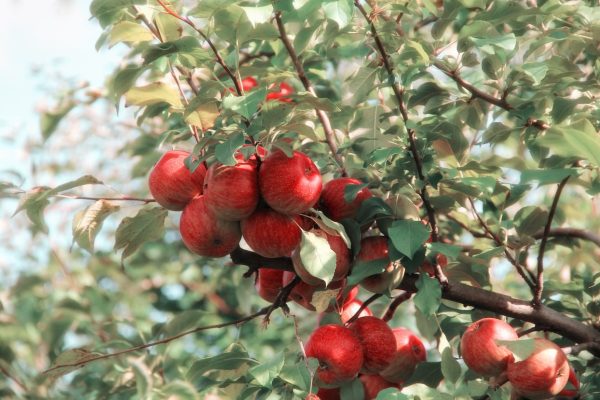
Our parishes and our school communities are like vineyards, and each of us a vine, with our
own ordered place in the disorderliness of the world.
Though we may often forget it, Christ the true vine is always abiding with us, his branches.
In fact, he is the trunk from which draw the graces sustaining our spiritual lives, rooting
us solidly in the fertile soil of the Word of God, and filling us with the water of the Holy
Spirit.
All we are asked to do is simply be, right where we are, at his side, reaching out towards
the light of the Son above, allowing ourselves to undergo the natural spiritual photosynthesis
by which we grow and mature enough to bear fruit for the Kingdom.
The true vine does not abide in us only if we cut ourselves off from him. And as we know
from nature, any branch that is not connected to the main plant withers and dies.
2. Abiding in Communion with Fellow Vines
No man is an island. We were created in the image and likeness of the Trinitarian God, to
live in community, cooperating and collaborating with one another in the communion of
love of the Father, Son and Holy Spirit.
Vines, by nature, cling to any means of support they can to reach the sun. Thus, vine-growers
train their vines on a network of trellises designed to maximise the productivity and long-term
health of the vines, and to make sure they do not become entangled with each other.
In the same way, we too have been gifted with the perfect support system for our spiritual
vines by the divine vine-grower. He has given us the Church, the Word of God and the
Sacraments in and through which we can flourish and grow as communities of faith.
We are assured of Christ’s intercession for us. Pope Leo wrote in his Mission Sunday message:
“Before his Passion, Jesus prayed to the Father, ‘that they may all be one. As you, Father,
are in me and I am in you, may they also be in us’ (John 17:21). These words reveal Jesus’
deepest desire, as well as the identity of the Church as a community of his disciples. That is,
a communion that flows from the Trinity, and continues to be sustained by the Trinity; a
communion at the service of fraternity among all human beings and harmony with all creation.”
If we find a lack of support from our ‘trellis’, it may be because the ‘vines’ – including ourselves –
are not at “the service of fraternity” with each other, jostling for space and exposure to the Light
to the detriment of others.
Thus, Pope Leo emphasized:
“In this context, the Church’s primary missionary responsibility is to renew and sustain
spiritual and fraternal unity among its members. In many situations, we encounter conflicts,
polarization, misunderstandings and a lack of mutual trust. When this occurs even within our
communities, it undermines our witness. The evangelizing mission that Christ entrusted to his
disciples requires, above all, hearts that are reconciled and eager for communion.”
3. Love, the Heart of Communion
If the heart of mission is communion, then the heart of communion is love.
“As the Father has loved me, so I have loved you; abide in my love. If you keep my commandments,
you will abide in my love, just as I have kept my Father’s commandments and abide in his love.”
(John 15:9–10)
We all know this is easier said than done – we probably find it more agreeable to love God than
to love our neighbours as God has loved them. How can we bring ourselves to actively love the
persons whom the Lord sends to be the thorns in our flesh and the splinters in our eyes?
Perhaps we could start small. St Teresa of Calcutta said, “We cannot all do great things,
but we can do small things with great love.”
Quoting St John Paul II in his Mission Sunday message, Pope Leo wrote: “Communion represents
both the source and the fruit of mission.”
Before vines bear fruit, they flower. The inflorescences of grapevines are tiny and totally
unremarkable in appearance, yet from these humble beginnings are formed the luscious fruit that we so enjoy – if the vines remain healthy i.e. grafted to the master vine.
This Lent, perhaps we could start in small ways, not only to abide in Christ through prayer,
but also to start doing little acts of love.
In his 2026 Lenten Message, Pope Leo invites us to:
- Be more prepared to listen to others:
“The willingness to listen is the first way we demonstrate our desire to enter into relationship
with someone. In revealing himself to Moses in the burning bush, God himself teaches us that
listening is one of his defining characteristics: ‘I have observed the misery of my people who are
in Egypt; I have heard their cry’ (Exodus 3:7).” - Fast from hurtful words:
“Let us begin by disarming our language, avoiding harsh words and rash judgement, refraining
from slander and speaking ill of those who are not present and cannot defend themselves. Instead,
let us strive to measure our words and cultivate kindness and respect in our families, among our
friends, at work, on social media, in political debates, in the media and in Christian communities.” - Strive to do the above together:
“Lent emphasizes the communal aspect of listening to the word and fasting… For example, the Book
of Nehemiah recounts how the people gathered to listen to the public reading of the Law, preparing
to profess their faith and worship through fasting, so as to renew the covenant with God (cf. 9:1-3).
Likewise, our parishes, families, ecclesial groups and religious communities are called to undertake
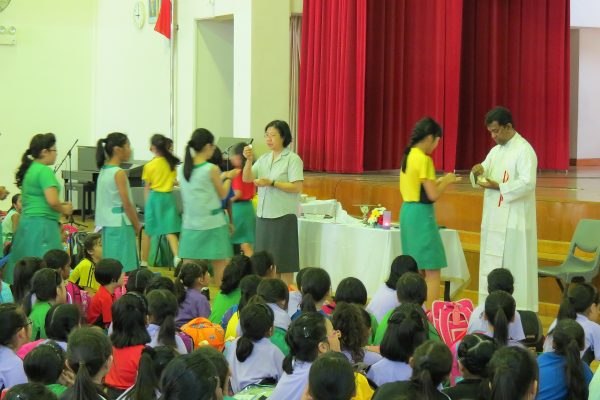
a shared journey during Lent.” So are our Catholic schools. For example, this Lent, ACCS is
collaborating with Assumption English School and St Joseph’s Institution to organise a Lenten
Programme for upper primary students of St Anthony’s Primary and De La Salle School on 10 March.
If we strive to start small, even with faith as tiny as a mustard seed, growth is still possible. Like the
first buds of the grapevine, such beginnings can one day bear fruit — good fruit. Through this fruit,
those around us, especially our non-Catholic students, may savour its goodness and come to “taste
and see that the Lord is good” (Psalm 34:8). These fruits can endure, for the seeds of faith they
contain may take root, grow, and become new vines themselves when sown in fertile soil.
And if we have already been bearing fruit, no matter how small our vine or feeble our yield seems to
us, our heavenly Father the vine-grower continues to gently prune us as friends and disciples – not
as servants – so that our harvest will be ever more bountiful for the glory of his name.
So, this Lent, let us always remember that, apart from the Lord, we can do nothing, but with him,
anything and everything is possible.
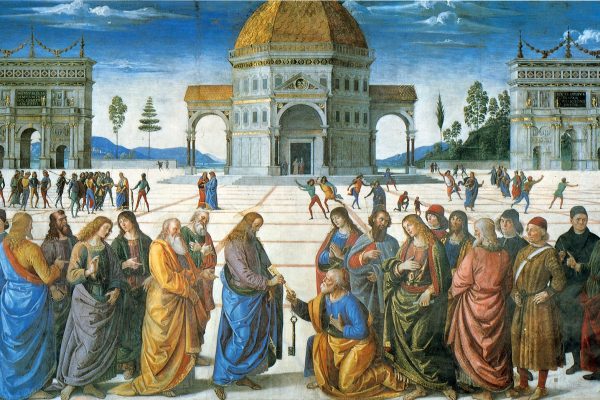
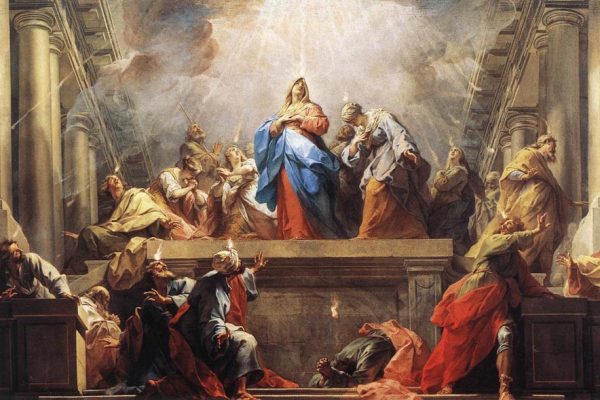
Photo: Wikimedia Commons.