Presenting the Catholic Worldview — Judge Justly, or Do Not Judge? by Ann Ang and Pauline Wong
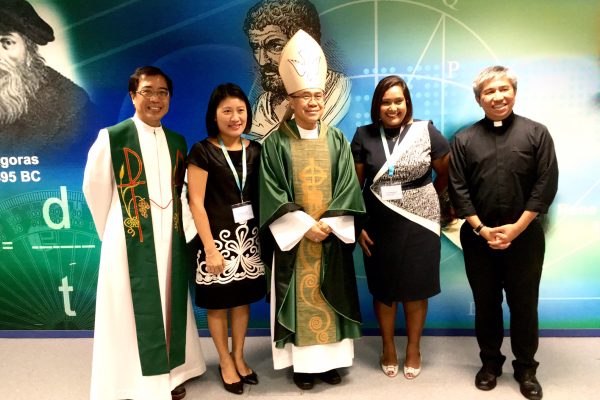
Not long ago, on November 7, 2025, ACCS held its inaugural Catholic Education Summit (CES),
school leaders and Board members – to reflect on the theme “On Your Marks!” referring to the
Five Marks of a Catholic School advocated by the Holy See.
One of these Five Marks calls on educators in Catholic schools to present the Catholic worldview.
A hallmark of Catholic education is the cultivation of a Catholic worldview, where faith is woven
into academic subjects to help students discover their identity and recognise God’s presence and
action in their lives.
Parker Palmer, renowned author of “The Courage To Teach”, says “To educate is to guide students
on an inner journey toward more truthful ways of seeing and being in the world.”
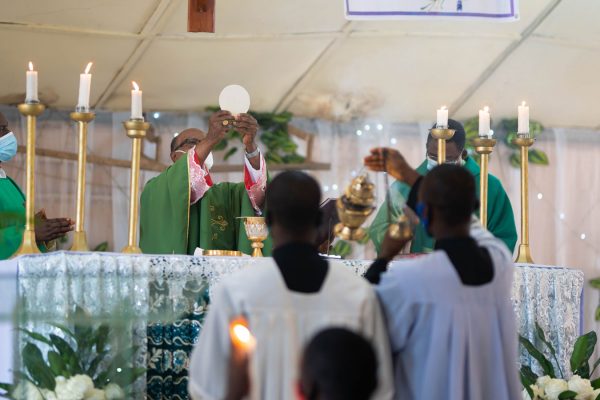
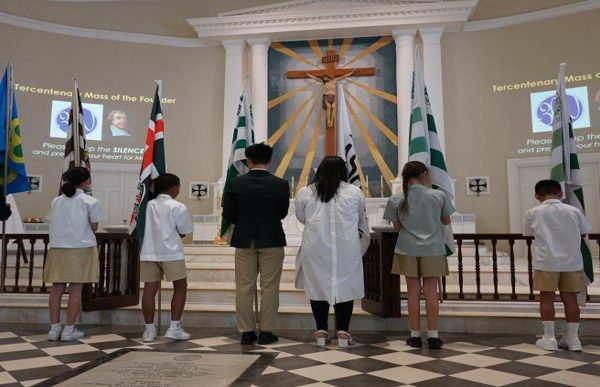
During the Commencement of School Year (COSY) Mass on January 25, 2026, Cardinal William
Goh exhorted all educators to form their students in the Gospel values of “truth, charity, love,
generosity and forgiveness”.
These exhortations clearly call for educators to courageously form their students in truth and love.
They also beg the question if this formation can be done simply by educating but not judging.
A Reflection by Educator Ann Ang
“Do not judge others, and God will not judge you; do not condemn others and God will not
condemn you.” Luke 6:37
How can one be an educator and not judge? After all, assessment is important to learning, and
we’re told that everything is assessment: pre-, post- and during the process. Yet, Luke 6:37
contains the famous line: “Do not judge others, and God will not judge you; do not condemn
others and God will not condemn you.” Often this is popularly interpreted to mean we should not
judge others at all, for fear that our wrongdoings will similarly be called into account. But
shouldn’t they? That’s what assessment for learning is. Some believe that compassion means not
judging at all. But this withholding of judgement sometimes looks more like a refusal to get
involved, or a fear of taking a stand on what is right or wrong. In a world of great diversity, isn’t it
better to let others be, if they are not doing any harm to you?
However, looking closely at what Jesus says, it is God who will judge us. Where there is no
judgement at all, and no willingness to judge, what comes to pass is moral relativism, where every
action is subjectively right or wrong, and right and wrong lose their distinct meanings. God, of
course, is the perfect judge, but what about us? In what sense can we be said to be judging, with
compassion? Again, popular perspectives on this are not especially helpful, because they ask us
to exercise empathy and stand in someone else’s shoes, or to hate the sin but not the sinner. They
do not explain what our response should be to the injustice or unjustness of the action. So, judge
we must, because a sense of right and wrong remains important.
Yet, some will still protest: it is a sin to judge others. Again, this puts us back in the dubious
position of not taking a stand at all. Impossible, in our line of work. To be more precise, it is unjust,
rash judgement that is a sin, when we insist on assessing someone and their actions in a way that
is false, distorted or excessive. Others have provided the perspective that rash judgement of
others is a reflection of a lack of honesty towards our own faults. Hence the verses that follow in
Luke 6:41: “why do you look at the speck in your brother’s eye, but pay no attention to the log in
your own eyes?” In other words, if we indulge in fault-finding and persecuting others, we are
probably out of balance with ourselves in our inner lives. Judging others with mercy means
exercising discernment and wisdom in the love of God that extends to others. Living in
communion with God implies living in community with others, even as compassionate judgement
means consistently inviting others and ourselves into working for goodness together. These are
huge, abstract words, but for educators, I think we know and feel right, when we judge justly. It
happens when what we say and do, whether as encouragement or chastisement, helps the
learner to learn.
Word of God
“Your word is a lamp to my feet and a light to my path” (Psalm 119:105)
Coincidentally, Sunday January 25, 2026, on which the COSY Mass was celebrated, was
also the Sunday of the Word of God. It is pertinent to ask if our assessments and judgements are
based on a Catholic worldview, informed by the Word of God?
If the Word of God does not shine a light to guide our path, how do we educators “guide
students on an inner journey toward more truthful ways of seeing and being in the world”? How
do we provide a Catholic schooling inspired and guided by the Word of God? How does the spirit
of Catholicism permeate the entire curriculum in a Catholic school?