Knockin’ on Heaven’s Door (it will be opened) by Geraint Wong
In Aesop’s fable of Hercules and the Wagoner, when a man gets his wagon stuck in mud, instead of pushing it out himself, he kneels and prays to Hercules for aid. Hercules appears and replies: “Put your shoulder to the wheel, urge on your horses, and then call on Hercules to help!” The man does so, freeing the wagon easily. The moral of the fable is stated as “Heaven helps those who help themselves”.
Centuries later, this moral was borrowed into Christianity, and many parents, mine included, would often tell their children: “God helps those who help themselves.” No doubt this was meant to discourage laziness, but then where does prayer come in?
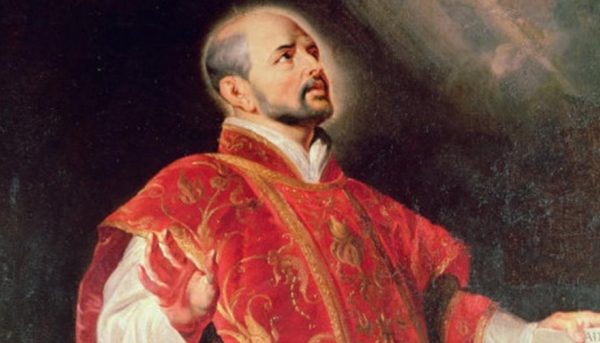
St Ignatius of Loyola had a much better maxim: “Work as if everything depends on you; pray as if everything depends on God.” It’s a call to live with both a work-attitude and a prayer-attitude at the same time: working in a spirit of prayerful dependence, and praying alongside responsible action.
Persistence in prayer
With this in mind, it is helpful to ask ourselves: How much do I pray? Do I turn to God in times of need? Do I deal with situations with God or without him? I suspect that many of us, having been taught that “God helps those who help themselves” and having been reminded in well-intentioned homilies not to treat God like a divine vending machine, may have developed the habit of relying on our own resources or on our families and friends in most circumstances instead of looking to God for help.
But is that what God expects of us? Listen to his lament: “I was ready to be sought out by those who did not ask, to be found by those who did not seek me. I said, ‘Here I am, here I am,’ to a nation that did not call on my name.” (Isaiah 65:1–2 NRSV)
Time and again, in both the Old and New Testaments, through prophets and psalmists and in the Person of Jesus, God invites, exhorts and even commands us to turn to him and ask him for whatever we need. Here are two instances:
- “Call on me in the day of trouble; I will deliver you, and you shall glorify me.” (Psalm 50[49]:15 NRSV)
- “Until now you have not asked for anything in my name. Ask and you will receive, so that your joy may be complete.” (John 16:24 NRSV)
Jesus even told the parables of the persistent widow (Luke 18:1–8) and the friend at midnight (Luke 11:5–13) to instruct us to keep asking God for what we need and not give up: “I tell you, even though he will not get up and give him anything because he is his friend, at least because of his persistence he will get up and give him whatever he needs.” (Luke 11:8 NRSV) So, yes, we have his permission to pester God with our requests!
Promises of answered prayer
Notice, too, that God doesn’t just ask us to call on him: he promises that our prayers will be answered. Here are a few more examples:
- “When he calls to me, I will answer him; I will be with him in trouble; I will rescue him and honour him.” (Psalm 91[90]:15 ESV)
- “Ask, and it will be given to you; seek, and you will find; knock, and it will be opened to you. For everyone who asks receives, and the one who seeks finds, and to the one who knocks it will be opened.” (Matthew 7:7 ESV)
- “I tell you, whatever you ask for in prayer, believe that you have received it, and it will be yours.” (Mark 11:24 NRSV)
At this point, I’m sure many of us will protest that this just doesn’t square with our own experience. As Pope Francis puts it: “How often have we asked and not received – we have all experienced this – how many times have we knocked and found a closed door?” Why is this so? On this side of Heaven, we can never be sure, of course.
But Pope Francis continues: “Jesus advises us, in those moments, to persist and to not give up. Prayer always transforms reality, always. If things around us do not change, at least we change; our heart changes… We can be certain that God will respond… He promised us this: he is not like a father who gives a serpent instead of a fish.” (General Audience, 9 Jan 2019)
I can testify that I have had so many of my prayer requests fulfilled time and again, from the biggest matters to the smallest details like finding a parking space in a crowded car park (“Hail, Mary, full of grace, get for me a parking space!”). And whenever my prayer wasn’t answered in the way I wanted, I always found my heart and my perspective changed. In the process, I have gradually become more acquainted with the way God works – and that growth in my relationship with him is ultimately the most important, because that’s what prayer is really about, isn’t it?
Perseverance in hope
What we need then is an attitude of persistence in prayer and hope in God’s faithfulness to his promises. And this hope, as we reflected during the Jubilee last year, will not disappoint us, “because God’s love has been poured into our hearts through the Holy Spirit, who has been given to us” (Romans 5:5 ESV). And remember that “the Spirit helps us in our weakness. For we do not know what to pray for as we ought, but the Spirit himself intercedes for us with groanings too deep for words. And he who searches hearts knows what is the mind of the Spirit, because the Spirit intercedes for the saints according to the will of God.” (Romans 8:26–27 ESV)
And we will pray, and pray persistently, knowing that God is our loving and providential Father, who only desires the best for us. But we also pray with humility, not with an attitude of entitlement or presumption, because, after all, God is God and we are not, and whatever wisdom we may claim to have is definitely no match for his.
St John Paul II says: “I plead with you – never, ever give up on hope; never doubt, never tire and never become discouraged. Be not afraid.” Whenever we find ourselves in any need, no matter how big or small, let’s not rely on human strength alone. Let’s turn to God and pray – persistently. Because the truth, as I have learnt from my own experience, is that God helps those who CANNOT help themselves. Thanks be to God for that!
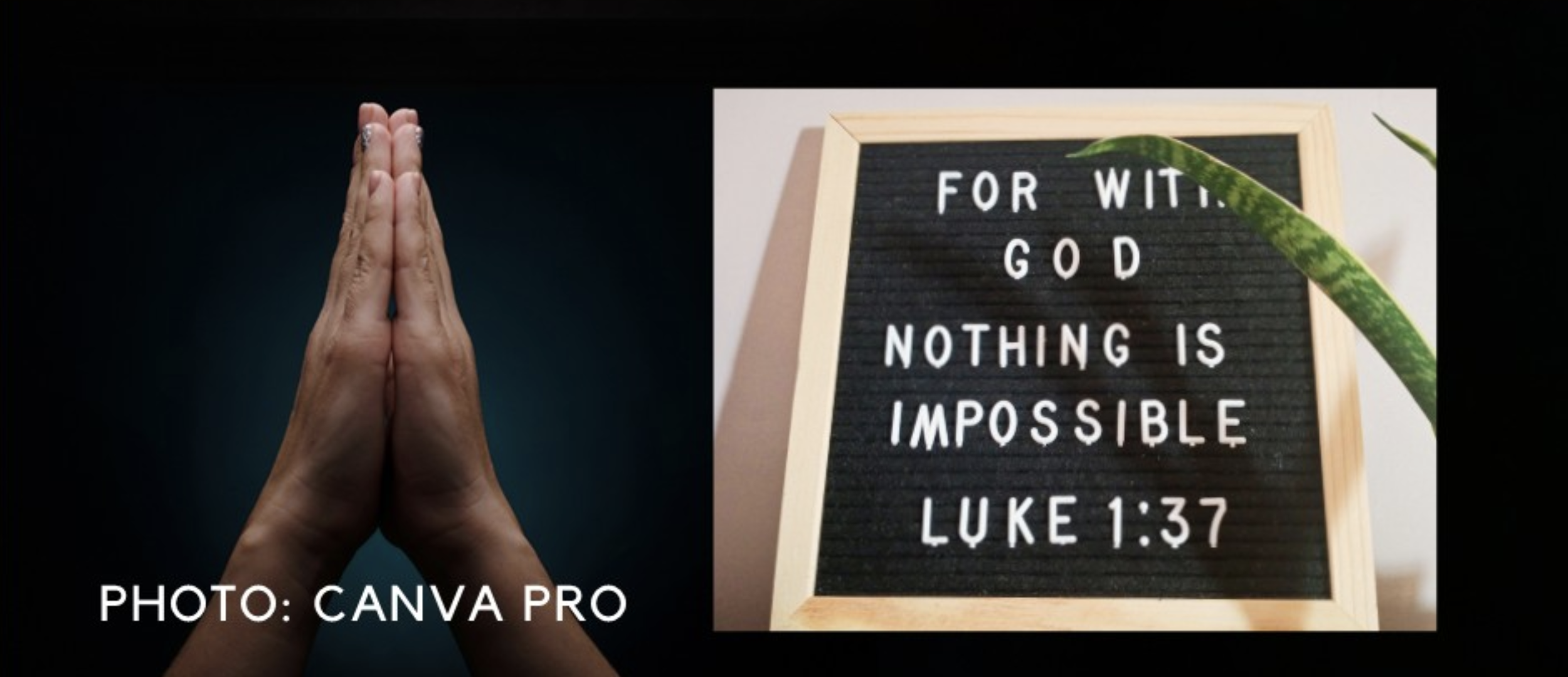
Photo: Canva Pro