Catholic Education for Faith and Renewal By Mrs Shirley Tan & Mrs Pauline Wong
The Lunar New Year, which began on 29 January, 2025, is an important festival for the Chinese in the Far East and the worldwide diaspora, including Singapore. Marking the arrival of spring, its celebration is steeped in rich cultural traditions having deep spiritual meanings.
It reminds us of the importance of family relationships, the circle of life in the natural world, and the collective hope for a brighter and more prosperous future; its association with springtime inspires not only fresh ideas and new ways of doing things, but also any sacrifices required to make space for new growth in our lives.
Springtime is also a metaphor for the spiritual renewal that Christianity offers. Just as the earth emerges from the cold grasp of winter into a season of growth, Christians believe in the possibility of personal and communal spiritual rebirth through faith in Christ. As we enter into the Lunar New Year how then can we, as educators and parents, bear witness to this spirit of faith and renewal?
Education
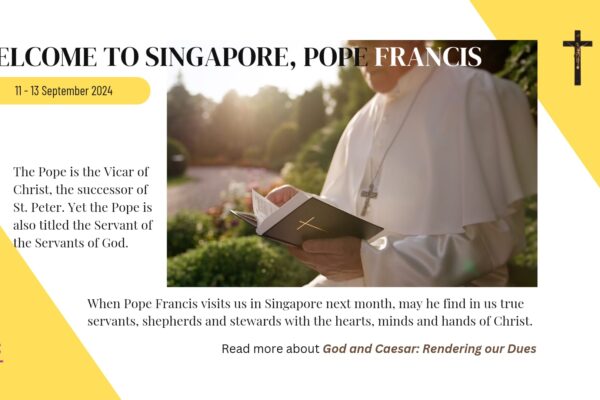
In February 2024, in his concluding message to Catholic educators who participated in a four- month-long conference in Madrid organised by the Spanish Bishops’ Conference (CEE)1, Pope Francis said: “Education is, above all, an act of hope in those before us, in their possibilities to change and contribute to the renewal of society.”
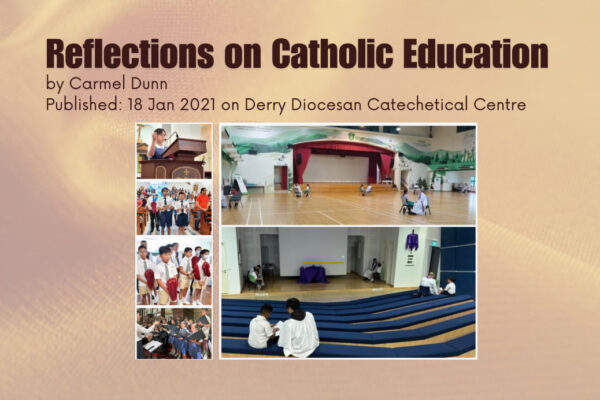
The Holy See sees “education as a process … that forms the whole child and seeks to fix his or her eyes on heaven.” What else but hope can give us the confidence to train our young people’s spiritual vision despite their world being dominated by a culture of individualism, relativism and secularism?
From our experiences as parents and educators, we can surely find something deep within us that gives rise to the hope that our children and students – made in the image and likeness of God – can be better versions of themselves. We must also put our faith in our God who will continue to love us, no matter the number of times we fail or fall.
Faith and renewal
Take, for example, the making New Year’s resolutions: if we’ve already made some, and already failed to keep them, let us not be too hard on ourselves.
Fr Ronald Rolheiser, OMI, a well-regarded Catholic columnist, explains: “It is a sign of health that we keep making new resolutions, despite a life-long history of failure. Why? In making new resolutions we are saying: ‘I believe in a God who continues to love me, even when I can’t live up to it.’ But more than that, making new resolutions is to express faith in the God of the resurrection. To try for new life, for a fresh start, precisely when bad habit has kept me so long in a certain helplessness, is to say: ‘I believe in the resurrection and the life!’”
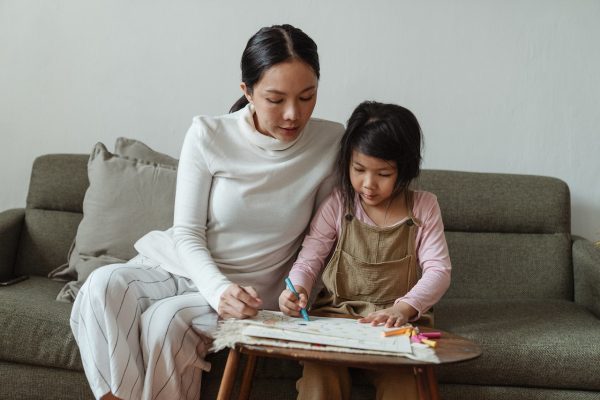
In the same way, parents and educators should not give up on children and youth easily, but instead, persevere to nurture them to their fullest potential to be the unique individuals that God has called them to be.
As Pope Francis told the Spanish educators, “the distinctive feature of Catholic education is true humanisation that arises from faith, and generates a culture of encounter.”
As parents and educators, let us constantly remind ourselves that, in our encounters with our young people, we are called to make daily acts of hope, keeping faith in their potential to be future contributors to the change and renewal of society and the world.
Let us also ponder: As parents (or first educators) and teachers in schools, do we subscribe to this Catholic vision of parenting and educating? Will we build a culture based on this Catholic vision in our homes and schools? This year, will we make a resolution to believe in the goodness of each and every child because he or she is made in the image and likeness of God?
After all, Pope Francis also said that “To be saints is not a privilege for a few, but a vocation for everyone”