Pope Francis’ 7 elements of God’s pedagogy by Michelle Tan
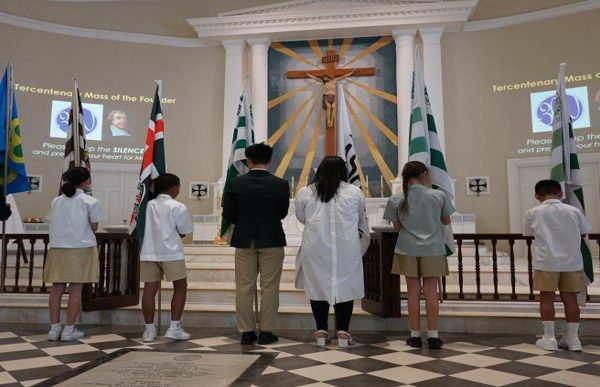
“The greatest gift we can give anyone is the gift of Jesus. Don’t be afraid to give Jesus to our young people. Don’t be afraid! They will be grateful to you for eternity!” This was the closing exhortation of Cardinal William Goh to some 500 Catholic educators, educators and students in Catholic schools, religious sisters and brothers, Management Committee and Board members of Catholic schools gathered for the annual Commencement of School Year (COSY) Mass on 19 January, 2025 at the Cathedral of the Good Shepherd. How exactly do we give our students Jesus? Pope Francis proposed a divine pedagogy to members of the Catholic Union of Teachers, Managers, Educators, Trainers (UCIIM), the Italian Association of Catholic Teachers (AIMC), and the Association of Catholic School Parents (AGESC) during a private audience held on 4 January, 2025 in the Vatican.

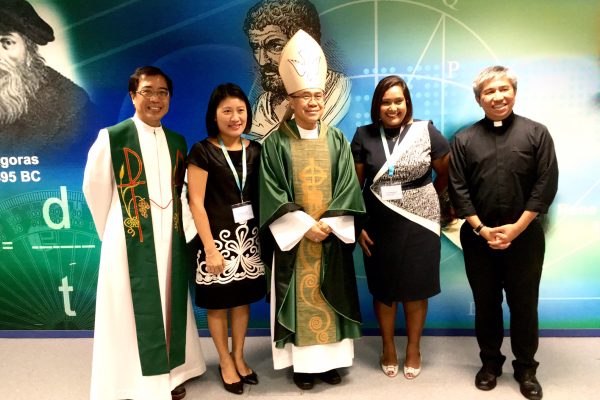
Pope Francis celebrates’ the 80th anniversary of the UCIIM and AIMC, and the 50th anniversary of the AGESC, with their representatives in Vatican City’s Pope Paul VI Hall on 4 January 2025. Photo: Vatican Media)
I have taken the liberty of repackaging what the Pope outlined as characteristics of God’s ‘educational method’ into 7 elements as follows: his original speech is at https://www.vatican.va/content/francesco/en/speeches/2025/january/documents/202 50104-uciim-aimc-agesc.html
1. Closeness, compassion and tenderness
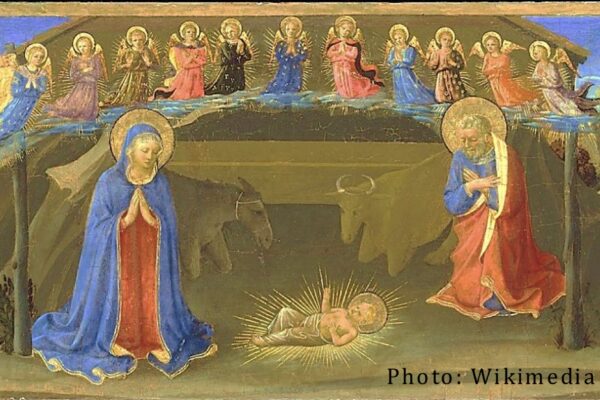
“Christmas is a time that shows us God is close, compassionate and tender. The Lord is a teacher who enters the world of his pupils, living among them and teaching them through the language of life and love. A remote pedagogy, distant from the people, is of no use, and does not help.” The Word became flesh to make us “partakers of the divine nature” (2 Peter 1:4). The Son of God became man so that we might become God (St. Athanasius). Emmanuel, God-with-us, can identify with all our children and students, be they infants, toddlers, preschoolers, primary school children, teenagers or young adults, because He has gone through all these phases of growing up Himself. He sees their hearts’ desire for love, acceptance and belonging. We too were young once. How much do we empathise with our students, and try to support them? Do we speak the words of kindness, affirmation and encouragement they long to hear? How much have we, as shepherds, ‘taken on the smell of our sheep’?
2. Humility and generosity
“Jesus was born in a condition of poverty and simplicity: Christmas teaches us that greatness is not manifested in success or wealth, but in love and service to others. God’s is a pedagogy of giving.” Whenever Jesus discerned a need, He was filled with compassion, and sought to provide, never using his authority to lord it over others. For example, when Jesus saw the vast crowd at the multiplication of the fish and the loaves, ‘His heart was moved with pity for them,” unlike His disciples who wanted to dismiss them, so they could buy their own food. (Matthew14:14-16) How much are we willing to give of our time and other resources to serve those in the greatest need? Are we Good Samaritans doing for others what we would like others do for us, or merely indifferent observers or passers-by?
3. Communion and family
“God’s pedagogy of giving is a call to live in communion with Him and with others, as part of a plan of universal fraternity, a plan in which the family has a central and irreplaceable position… In the family, one talks! Family is dialogue, it is dialogue that makes us grow.” Jesus could always engage in authentic dialogue with everyone, whether with Our Lady at the wedding at Cana, the Twelve during his public ministry, friends like Martha, Mary and Lazarus, his enemies the scribes and Pharisee, or the crowds. How familiar are we with our students’ family circumstances? Do we genuinely seek open and honest dialogue with our students and their parents? As children of God, how often do we commune with God in prayer, whether on our own or together with our fellow Catholics?
4. Acceptance and respect for human dignity
“God’s pedagogy is an invitation to recognise the dignity of every person, starting from those who are rejected and at the margins, just as the shepherds were treated two thousand years ago, and to appreciate the value of every phase of life, including childhood.” Jesus was willing to give of Himself to serve and minister with love and non-judgment – saint or sinner, lord or labourer – because all had equal dignity as human persons created by God. Do we meet our students where they are, and accept them for who they are? Are we able to see the image and likeness of God in each of them? ‘God has no favourites’ (Romans 2:11) – do we?
5. A culture of peace, not war
“You are called to develop and transmit a new culture, based on the encounter between generations, on inclusion, on the discernment of the true, the good and the beautiful; a culture of responsibility, both personal and collective, to face global challenges [particularly] the great challenge of peace. But if at school you wage war among yourselves, that is preparing for war, not peace.” St. Paul describes how we might acculturate ourselves to Christ, the Prince of Peace: “As God’s chosen people, clothe yourselves with compassion, kindness, humility, gentleness and patience. Bear with each other and forgive one another if any of you has a grievance against someone. Forgive, as the Lord forgave you. And over all these virtues put on love, which binds them all together in perfect unity. Let the peace of Christ rule in your hearts, since as members of one body you were called to peace.” (Colossians 3:12-15) What wars rage in our hearts? How reconciled are we with ourselves, with others, and with our life circumstances, whether in school, at home or in church? Are we at peace with God? We cannot share what we do not already possess.
6. Accompaniment in hope
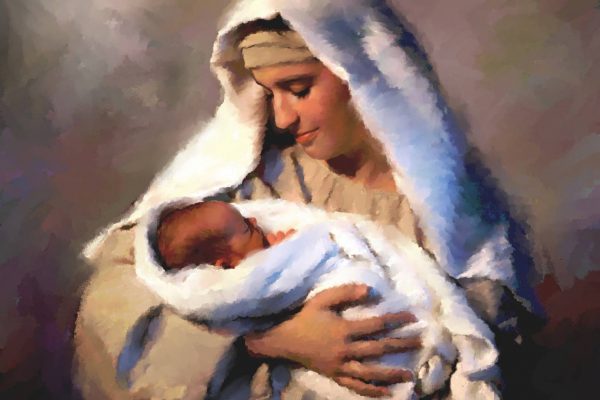
“A good teacher is a man or a woman of hope, devoting themselves with confidence and patience to [nurturing their students] in the conviction that every educational effort has value, and that every person has a dignity and a vocation that deserves to be nurtured.” As Cardinal Goh said at the COSY Mass, “the whole approach of Catholic education should be to help the child find his or her vocation” because “every vocation is a form of service: it is in service to others that we find our true selves, and it is in ‘being’ for others that we find our own ‘being’.” When we are tempted to lose hope in ourselves or our students, let us emulate Our Lady, who did not give up hope on God’s promise to give her son a kingdom that would never end (Luke 1:33), even when Christ was taken down from the cross and laid in her arms. “Hope is the motor that sustains educators in their daily effort, even in difficulty and failure. So as not to lose hope, and to foster it every day, let us keep our eyes fixed on Jesus, our teacher and travelling companion!” as did the disciples on the road to Emmaus, after their eyes were opened at the breaking of bread. (Luke 24:13-35) Do we see our role in Catholic education as a vocation, a divine calling, or as a career, a job, a secular pursuit? How do we use our God-given talents – in hope born of faith and lived in charity for others, or with hubris and self-love? Do we keep our students on the path of Jesus’ teachings, or lead them astray?
7. Collective memory and commitment
“It is a good opportunity to remember your history and look to the future. This movement between roots, memory and fruits, is the key to commitment in education… Never forget where you come from, but do not walk with your head facing the other way, mourning times past. Instead, think of the present of the school, which is the future of society… [Work together] because in this way you can better bear witness to the face of the Church in the schools and for the schools.” Our Catholic schools stand proud today as the fruits of their founders’ labours of love and faith, and the perseverance and sustained hope of those who came after them. Now it is our turn to read the ‘signs of the times’ and continue their mission to preserve their legacy. How familiar are we with our schools’ history? Are we a vibrant, evangelising and missionary school in the spirit of our founders, conquering hearts for Christ, or are we a an institution in mere maintenance mode?
The 7 elements of God’s pedagogy and the 5 essential marks of Catholic schools

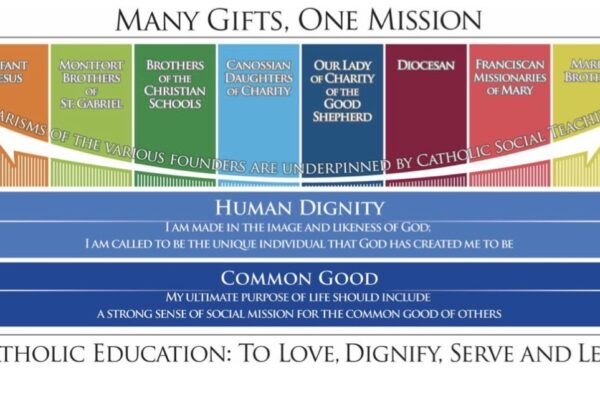
The 7 elements of God’s pedagogy mirror the 5 essential marks. If we adopt the 7 elements and seal our schools with the 5 marks, then we will surely bless our students with the gift of Jesus, and the hope, joy, peace and life in abundance only He can bring. We will not be alone: Christ our Master Teacher walks alongside us. In this Jubilee Year of Hope, Pope Francis encourages us forward: “Optimism disappoints, but hope never disappoints, never; hope is always on the move, and makes us move too, so go forth in confidence!”