Who is the Holy Spirit? by Michelle Tan
We have been chosen and sent by the Holy Spirit on our mission to build up the Kingdom of God as Catholic educators, whether in Catholic or non-Catholic schools.
In his great 1975 Apostolic Exhortation Evangelii Nuntiandi (Proclaiming the Gospel) – which we reflected on in Sowers February 2026 – Pope Paul VI wrote: “The Holy Spirit is the principal agent of the whole of the Church’s mission.” (EN 21)
But who exactly is the Holy Spirit? And how is the Spirit the “principal agent” of our mission?
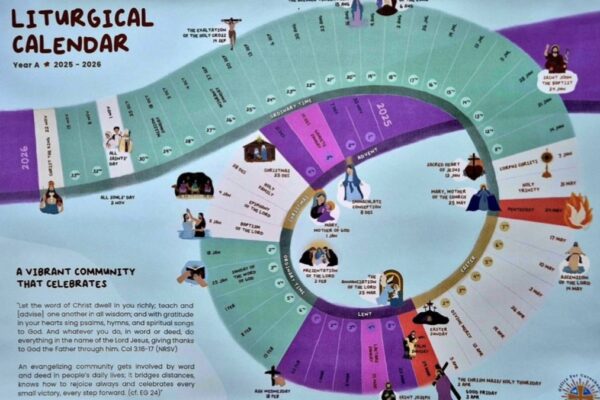
During this liturgically significant month, the Church celebrates the Solemnity of the Ascension of the Lord on 14 May, the end of Eastertide on Pentecost Sunday 24 May, and the Solemnity of the Most Holy Trinity on 31 May. These celebrations have much to teach us about the Holy Spirit.
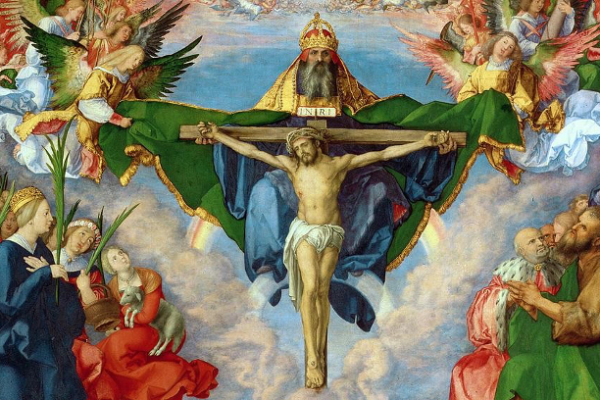
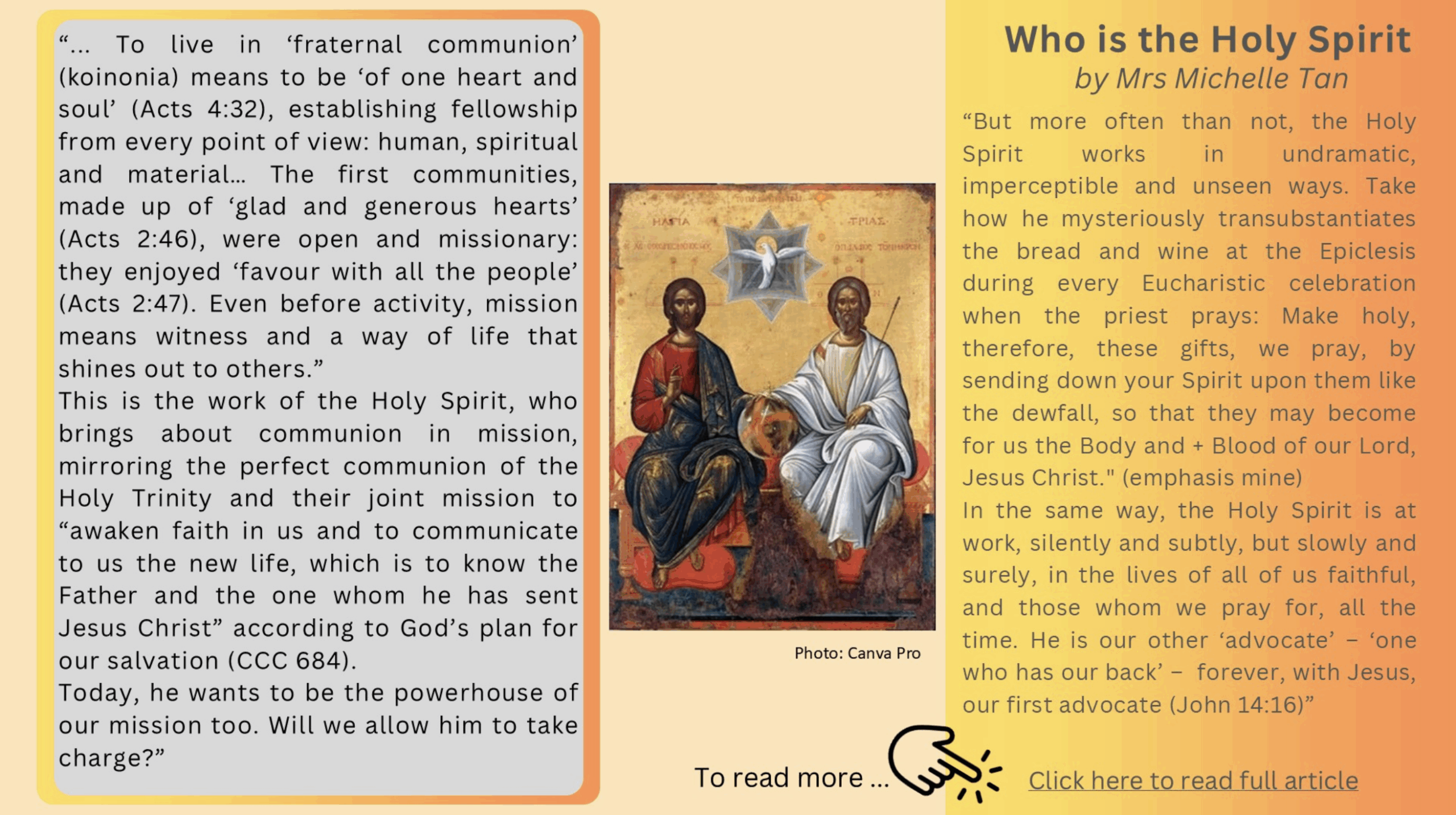
Trinity Sunday: The Holy Spirit is the third person of the Holy Trinity
The Catechism of the Catholic Church (CCC) says: “When the Father sends his Word, he always sends his Breath.” (CCC 689) “The Word of God and his Breath are at the origin of the being and life of every creature.” (CCC 703).
St Augustine famously described the Holy Trinity as Lover (Father), Beloved (Son), and Love (Holy Spirit), i.e. the Love of the Father for the Son, and the Son for the Father, and the Love both Father and Son have for each other and every human person created in their image and likeness.
The Spirit is the Love that has been “poured into our hearts” (Romans 5:5) and dwells within us, making us “temples of the Holy Spirit” (1 Corinthians 6:19).
The Holy Spirit is the spirit of the Risen Christ who will be with us “always, until the end of the age” (Matthew 28:20). He was last person of the Trinity to be revealed, on Pentecost Sunday. Since the Holy Spirit is pure spirit, he cannot be seen or ‘known’ except through the effects of his actions.
So when persons are moved or touched by the Holy Spirit, they may cry tears of joy or repentance, feel a warmth as though enveloped in a loving embrace, trembling like a leaf with awe or wonder, or perhaps some or all of the above coupled with a lightening of the heart and a soaring of the soul as though a weight is lifted, or shackles untied.
Hence, the Holy Spirit is often symbolised by water, fire, wind and a dove, traditionally a sign of peace, gentleness and freedom.
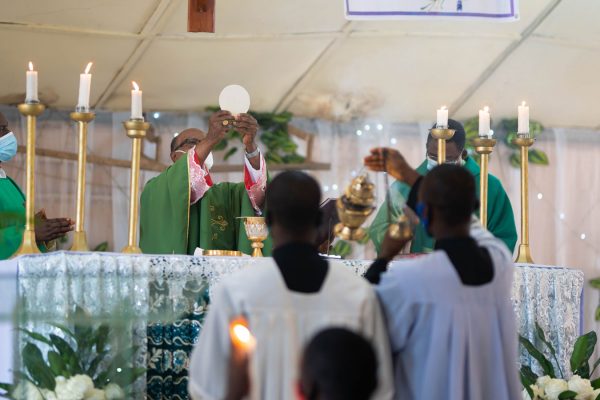
But more often than not, the Holy Spirit works in undramatic, imperceptible and unseen ways. Take how he mysteriously transubstantiates the bread and wine at the Epiclesis during every Eucharistic celebration when the priest prays: Make holy, therefore, these gifts, we pray, by sending down your Spirit upon them like the dewfall, so that they may become for us the Body and + Blood of our Lord, Jesus Christ.
In the same way, the Holy Spirit is at work, silently and subtly, but slowly and surely, in the lives of all of us faithful, and those whom we pray for, all the time. He is our other ‘advocate’ – ‘one who has our back’ – forever, with Jesus, our first advocate (John 14:16).
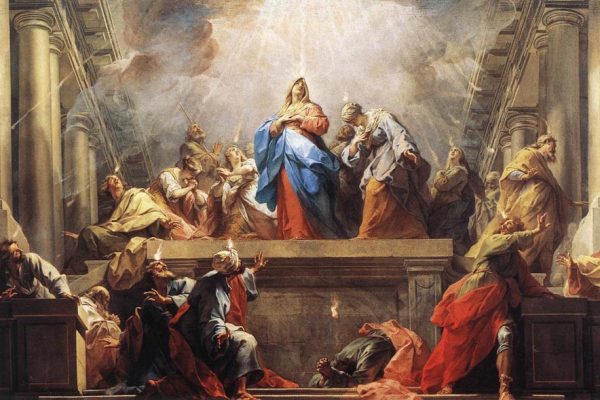
Pentecost: The Holy Spirit is the soul of the Church, the Body of Christ
Although Pentecost is often referred to as the “birthday of the Church”, technically, the Church was born on Good Friday.
“The origin and growth of the Church are symbolised by the blood and water which flowed from the open side of the crucified Christ [water and blood symbolising the life-giving sacraments of Baptism and Eucharist]. As Eve was formed from the sleeping Adam’s side, so the Church [the Bride of Christ] was born from the pierced heart of Christ hanging dead on the cross.” (CCC 766)
But it was only on Pentecost Sunday that “the Church was openly displayed to the crowds and the spread of the Gospel among the nations, through preaching, was begun.” (CCC 767)
The outpouring of the Holy Spirit transformed and empowered the motley crew of 11 ordinary, most uneducated, men on the street into extraordinary prophets and witnesses who proclaimed Christ and handed on his teachings with such boldness and zeal that 2,000 years later, we have received the same.
This is why Pope Paul VI wrote (EN 24): “The Holy Spirit is indeed the principal agent of the whole of the Church’s mission. His action can clearly be seen in the early Church: in the conversion of Cornelius (Acts 10), in the decisions made about emerging problems (Acts 15) and in the choice of regions and peoples to be evangelised (Acts 16:6ff). The Spirit worked through the apostles, but at the same time he was also at work in those who heard them: Through his action, the Good News takes shape in human minds and hearts and extends through history. In all of this it is the Holy Spirit who gives life.” (emphasis mine)
If you are reading Sowers today, it is because the Holy Spirit has been, and still is, working in you, and wants to work through you to shape the minds and hearts of your students and everyone else whose life you touch.
Ascension Thursday: The Holy Spirit, the powerhouse of mission
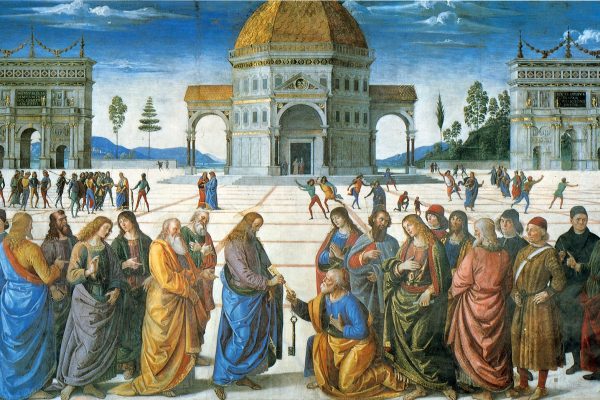
Just before his ascension into heaven, Jesus enjoined his apostles not to leave Jerusalem: “You will receive power when the Holy Spirit comes on you, and then you will be my witnesses not only in Jerusalem but throughout Judaea and Samaria, and indeed to the ends of the earth.” (Acts 1:8)
Pope Paul VI wrote: “Evangelisation will never be possible without the action of the Holy Spirit. The Spirit descends on Jesus of Nazareth at the moment of His baptism when the voice of the Father – ‘This is my beloved Son with whom I am well pleased’ (Matthew 3:17) – manifests in an external way the election of Jesus and His mission.
Jesus is ‘led by the Spirit’ to experience in the desert the decisive combat and the supreme test before beginning this mission (Matthew 4:1). It is ‘in the power of the Spirit’ (Luke 4:14) that he returns to Galilee and begins his preaching at Nazareth… To the disciples whom He was about to send forth He says, breathing on them, ‘Receive the Holy Spirit’ (John 20:22). (EN 75)
In the same way, “When the first evangelisers go down from Jerusalem, the Spirit becomes even more of a ‘guide’, helping them to choose both those to whom they are to go and the places to which their missionary journey is to take them. The working of the Spirit is manifested particularly in the impetus given to the mission which, in accordance with Christ’s words, spreads out from Jerusalem to all of Judea and Samaria, and to the farthest ends of the earth.” (EN 24)
Wherever the Good News was proclaimed, communities of faith quickly sprang up. As Pope St John Paul II pointed out in his 1990 Encyclical Redemptoris Missio (The Mission of Christ the Redeemer): “One of the central purposes of mission is to bring people together in hearing the Gospel, in fraternal communion, in prayer and in the Eucharist. To live in ‘fraternal communion’ (koinonia) means to be ‘of one heart and soul’ (Acts 4:32), establishing fellowship from every point of view: human, spiritual and material… The first communities, made up of ‘glad and generous hearts’ (Acts 2:46), were open and missionary: they enjoyed ‘favour with all the people’ (Acts 2:47). Even before activity, mission means witness and a way of life that shines out to others.”
This is the work of the Holy Spirit, who brings about communion in mission, mirroring the perfect communion of the Holy Trinity and their joint mission to “awaken faith in us and to communicate to us the new life, which is to know the Father and the one whom he has sent Jesus Christ” according to God’s plan for our salvation (CCC 684).
Today, he wants to be the powerhouse of our mission too. Will allow him to take charge?
Mary, Mother of the Church and St Joseph: Filled with the Holy Spirit
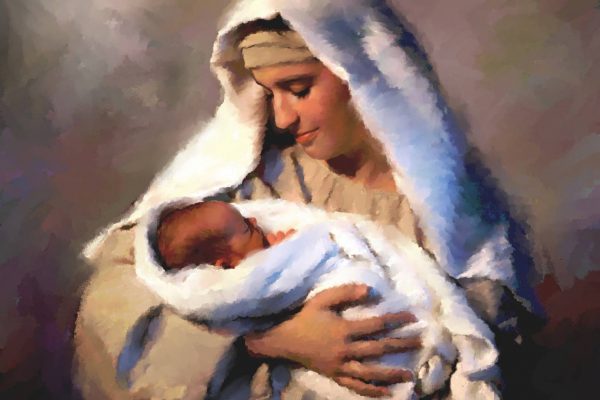
It is no coincidence that the memorial of Mary, Mother of the Church takes place one day after Pentecost, this year on May 25.
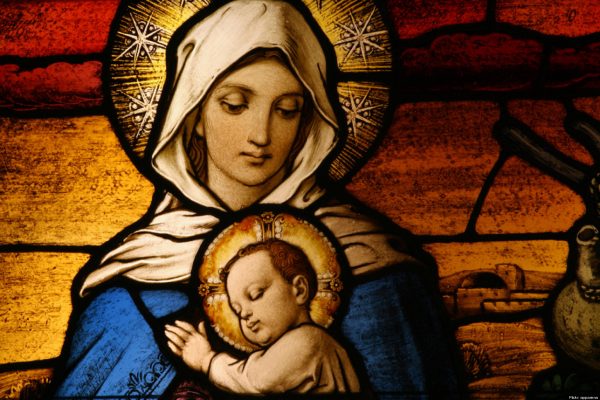
Instituted by Pope Francis in 2018, the celebration emphasises Mary’s maternal care and continued intercession for the Church: having received the Holy Spirit already at the Annunciation, she was in the Upper Room praying for and with the apostles as they awaited the coming of the Holy Spirit. Together with Christ, she too will be with us ‘always, until the end of the age’.
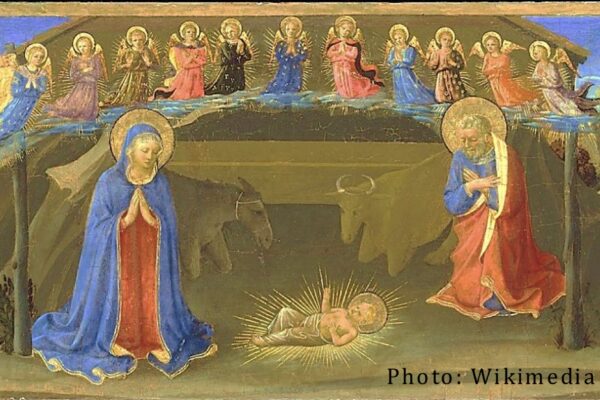
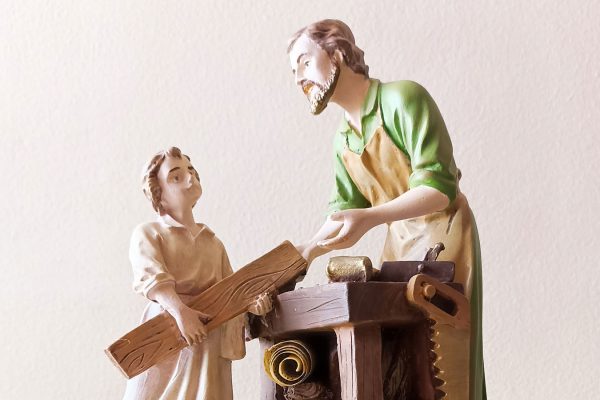
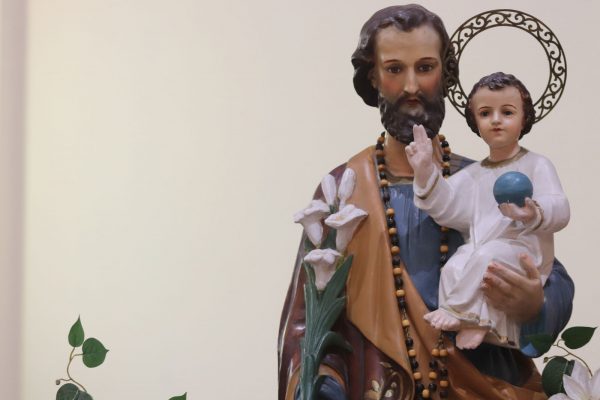
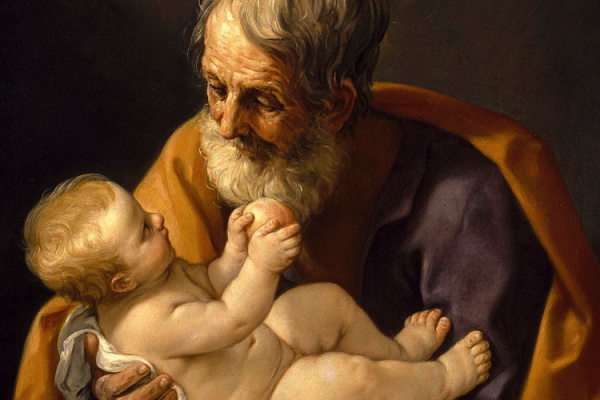
So too will St Joseph, whom Pius IX had proclaimed the patron saint of the Universal Church in 1870. In 1889, Leo XIII proclaimed him patron saint of fathers and workers, and in 1955, Pope Pius XII instituted the feast of St Joseph the Worker on May 1. He too had been visited by the Spirit on various occasions after the Annunciation, and had obeyed the Spirit’s promptings in taking Mary as his wife, fleeing to and returning from Egypt after the Nativity, and providing for the Holy Family all his life.
Both Mary and Joseph, as good parents and educators, had taught Christ the Jewish holy scriptures and the teachings of the rabbis in the witness of their lives.
May we seek the intercession of Our Lady, St Joseph and the Holy Trinity as we continue our Communion In Mission as Catholic educators, and as missionaries in our families, schools and marketplaces, doing our bit to pray and work for peace in society and the world.
And may this liturgically rich month of May immerse us, and help us treasure even more the spiritual riches of our faith.