Youth Day: Reflections by Michelle Tan
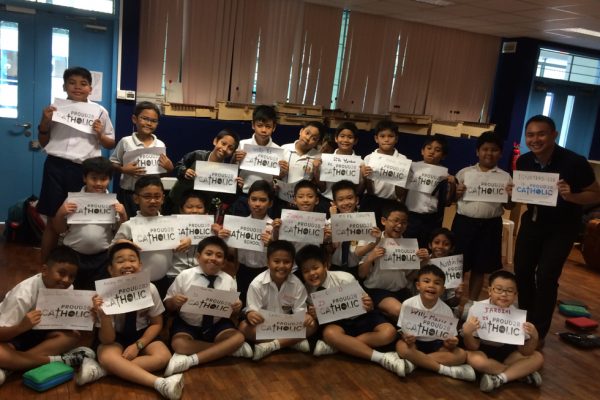
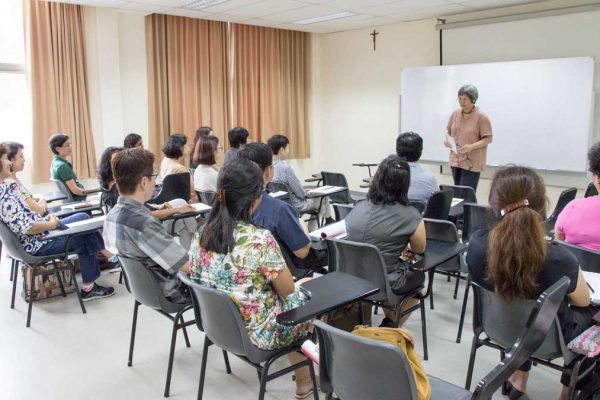
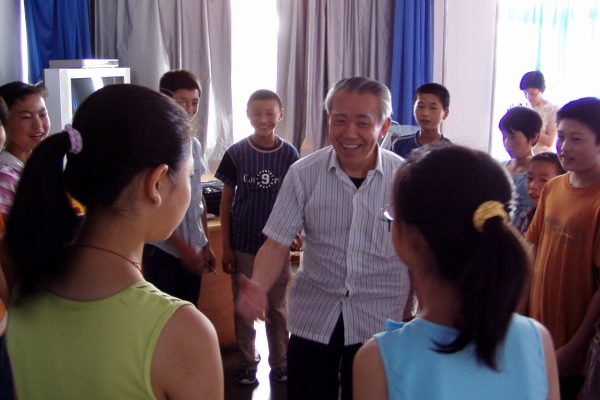
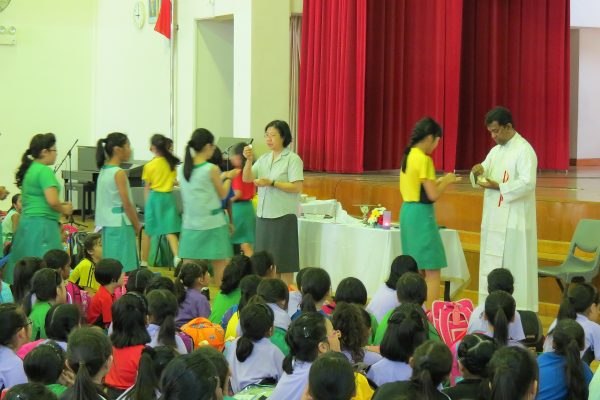
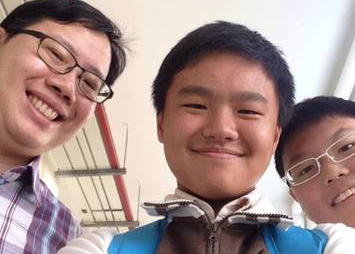
Every year, on the first Sunday of July, Singapore celebrates Youth Day. It is a timely opportunity to honour the dignity, the gifts, and the struggles of young people in our homes and classroom, and to recommit, as educators and parents, to journeying with them on the road of life.
It is a timely reminder for Catholic educators, mid-year, to heed the words of Pope Francis to young people: “Christ is alive and he wants you to be alive!” [Apostolic Exhortation Christus Vivit (2019), 1], alive in him and for his mission.
Youth in the Eyes of Christ
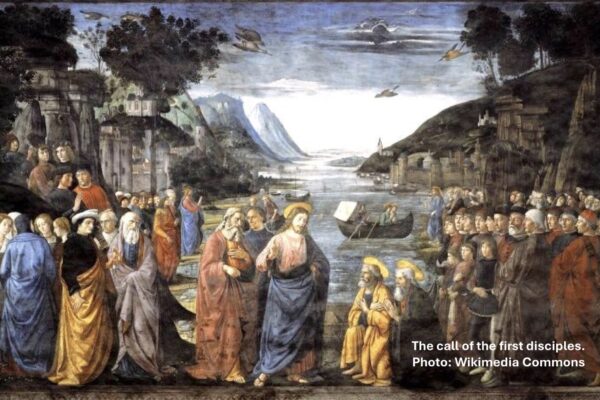
In the Bible, youth is no impediment to mission. On the contrary, it is often a time of great openness to God’s call.
As Pope Francis reflected in Christus Vivit (CV), “Samuel was still a young boy, yet the Lord spoke to him. Thanks to the advice of an adult, he opened his heart to hear God’s call: ‘Speak, Lord, for your servant is listening'” (1 Samuel 3:9–10; CV 8).
When Jeremiah protested his call: ‘Ah, Lord God! Truly I do not know how to speak, for I am only a boy!’ God assured him, “Do not say, ‘I am only a boy’; for you shall go to all to whom I send you, and you shall speak whatever I command you. Do not be afraid of them, for I am with you to deliver you, says the Lord.” (Jeremiah 1:7–8)
And St Paul instructed his protégé Timothy: “Let no one have contempt for your youth, but set an example for those who believe, in speech, conduct, love, faith and purity” (1 Timothy 4:12).
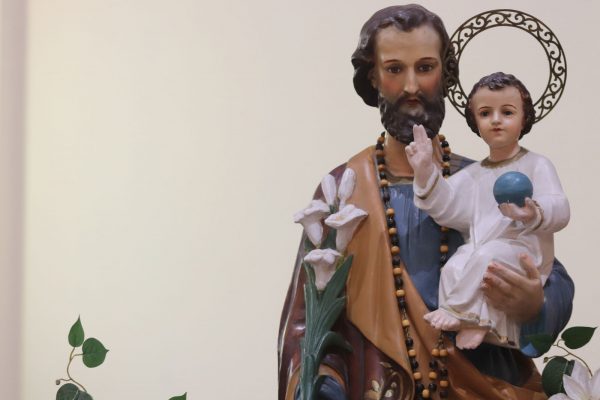
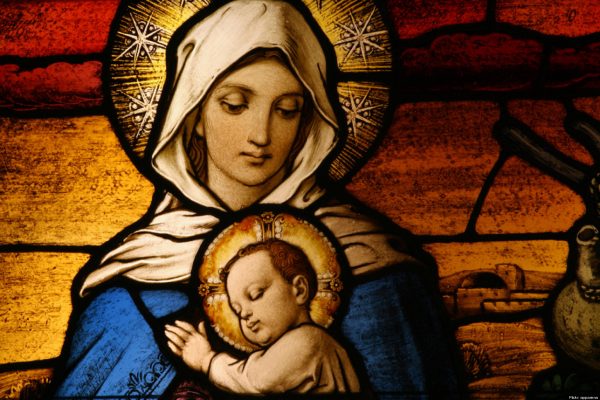
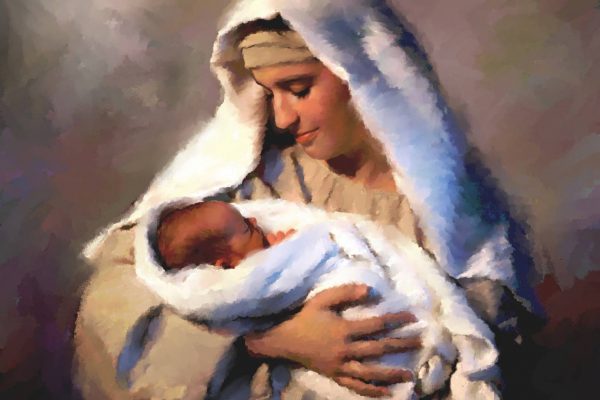
How often have we mentored any young person in their journey of life and faith, following the example of Eli with Samuel, the Lord with Jeremiah, St Paul with Timothy, and Our Lady and St Joseph with Jesus, such that he or she “increased in wisdom and in years, and in divine and human favour” (Luke 2:52)?
Youth as a Possession of Humanity
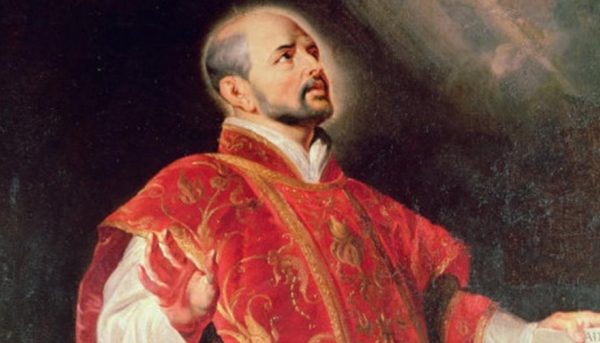
Pope St John Paul II, in his 1985 Apostolic Letter Dilecti Amici (Dear Friends) to the youth of the world on the occasion of the United Nations’ International Year of Youth, insisted that youth is not merely a personal phase of life but a gift to the whole human family.
“Youth is not only a period of life corresponding to a certain number of years,” he wrote, “it is the whole of that space that every man traverses in his life’s journey, and at the same time it is a special possession belonging to everyone. It is a possession of humanity itself…. Responsibility for this present reality and for its shape and many different forms lies first of all with adults. To you belongs responsibility for what will one day become reality together with yourselves, but which still lies in the future.”
In other words, the young are the living bridge between what they have received and what they are called to build.
As the Second Vatican Council bluntly put it, “It is you who are to receive the torch from the hands of your elders and to live in the world at the period of the most gigantic transformations ever realised in its history. It is you who, receiving the best of the example of the teaching of your parents and your teachers, are to form the society of tomorrow. You will either save yourselves or you will perish with it.” (1965 Message to Youth)
We were youth once. How did we bridge the past we received with the future we were called to build then? How did we contribute to our present time?
Youth at the Cusp of a “Gigantic Transformation”
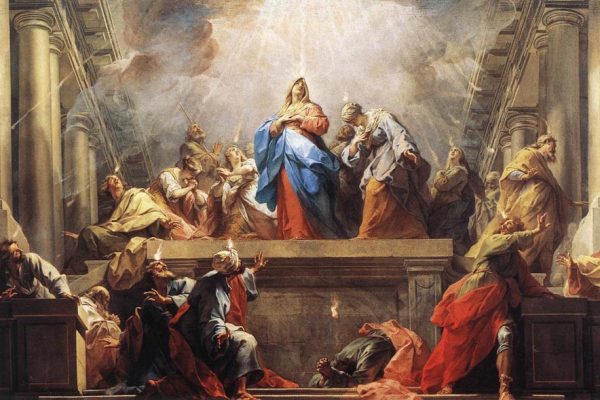
The Second Vatican Council was uncannily prophetic.
In 1965, the post-World War II world was being transformed by the Cold War and the existential threat of nuclear conflict; rapid decolonisation and the reshaping of the entire global political map; the Space Race and other technological advances; social upheavals; the spread of mass media and global communications; the rise of communism, atheism, secularism, and materialist ideologies, all competing for the hearts and minds of the younger generations.
Just over 60 years later, our youth are living in analogous times. As Pope Francis pointed out, a World War III is being fought “piecemeal”; there is still a nuclear crisis; the post-Cold War rules-based international system is giving way to deglobalisation and super-power rivalry; the Space Race has resumed; traditions, religious values and morals are still being eroded, with all these compounded by the disruptions due to socio-economic ills, climate change, pandemic threats, and of course, the social media and AI revolution.
It is hard to imagine today that, in 1965, television was the new mass medium. The youth then were exposed to shared images and/or narratives in radio and TV programmes, magazines, etc. Today, algorithms curate personalised content for youth, potentially isolating them in their own virtual realities — oxymoronic echo chambers where falsehood often masquerades as truth.
What other ‘gigantic transformations’ is the world going through? How are we coping? How are we helping our young people cope?
Youth in a Digital World
In Christus Vivit, Pope Francis acknowledged that although social media can “provide an extraordinary opportunity for dialogue, encounter, and exchange between persons, as well as access to information and knowledge” (CV 87), it also exposes young people to the risk of self-isolation, addiction, and a bombardment of data that dulls rather than enriches — “a kind of mental pollution.”
Young people who measure their worth by the number of ‘likes’ on an Instagram post, or in comparison to the carefully edited highlight reels of their peers, are vulnerable to the destructive lie that they are not enough.
In his 2026 landmark first encyclical Magnifica Humanitas (Magnificent Humanity), Pope Leo XIV warns that AI’s ability to deliver instant, summarised answers risks “extinguishing the desire to ask questions” and that hyper-stimulated young people experience “fatigue, boredom, and apathy” and resistance to undertake the process of discernment and genuine learning that “bears fruit only over time” (MH 140).
Hence Pope Leo XIV called for a renewed “educational alliance for the digital age” — a collaboration among families, schools, faith communities, and public institutions — all of which are “not called to follow the pace of the digital world but to offer that which the digital sphere by itself cannot provide, namely a shared time for learning and developing trustworthy relationships” (MH 141).
More than ever, our young people — whether they realise it or not — are thirsting for oases of quiet in deserts of noise, safe spaces where they can establish their identity and find belonging and acceptance, and sanctuaries where they can speak from and listen with their hearts with others in face-to-face physical encounters.
How are our schools and homes safe and serene havens for our young people?
Mental Health: A Silent Crisis
In his Message for World Youth Day 2024, Pope Francis acknowledged that “many of your contemporaries who experience wars, violent conflict, bullying, and other kinds of hardship are gripped by despair, fear, and depression. They feel as if they are in a dark prison, where the light of the sun cannot enter.”
In May 2025, the Straits Times reported that “mental disorders are the leading cause of disability and death among 10- to 14-year-olds in Singapore, while the impact of mental distress on population health here is the highest in Asean, according to a new paper published in medical journal Lancet Public Health on May 28.” The Institute of Mental Health also reported that its 2022–23 National Youth Mental Health Study found that about 1 in 3 young people aged between 15 and 35 years in Singapore reported experiencing severe or extremely severe symptoms of depression, anxiety and/or stress.
The pressures of academic performance, fears of an uncertain future, and social isolation despite digital hyperconnectivity leave many young people feeling alone in the crowds around them. Yet many mask their feelings very well for fear of judgment.
In response, Pope Francis urged: “When you feel surrounded by the clouds of fear, doubt, and anxiety and you no longer see the sun, take the path of prayer.” This is a reminder to young people to seek not only professional help where needed, but also to find strength in their Good Shepherd who never abandons them.
“Even though I walk through the darkest valley, I fear no evil; for you are with me; your rod and your staff — they comfort me.” (Psalm 23:4)
How might we or our school/home environments be contributing to the lack of mental well-being in our youth? What could we do about it?
Parental, Societal and Self-Expectations
In a high-achieving Singapore, success is often defined by high grades in exams, good universities, prestigious careers, and high salaries. The flourishing of a person’s inner, spiritual life does not feature much in the assessment of the secular world.
Pope Leo XIV, in his 2025 Message for the 40th World Youth Day, told the story of the Rich Young Man (Mark 10:17–22). The young man came to Jesus rich in the eyes of the world, with wealth, social status, and in the prime of his life. Still, he found something missing: “What must I do to inherit eternal life?” When he could not bring himself to give away all his riches to the poor and follow Jesus, the Bible tells us the Lord, instead of reproaching or condemning him, looked at him and “loved him” (Mark 10:21).
Pope Leo wrote, “Christ alone fully knows who we are and why we are here; young people, he knows your heart, your indignation in the face of discrimination and injustice, your desire for truth and beauty, for joy and peace. Through his friendship, he listens to you, motivates you, and guides you, calling each of you to a new life.”
Jesus meets each young person where he or she is, and looks at everyone with Christian love and without judgment. Do we?
Why the Catholic Church Celebrates Youth Day
Inaugurated by Pope St John Paul II in 1985, the Church traditionally celebrates World Youth Day locally around the end of the liturgical year and the feast of Christ the King, and internationally every two years. The next international event is in Seoul 2027.
In his ‘pitch’ to the Roman Curia, the Pope said, “All the young people should feel followed by the Church: that is why all the Church, in union with the Successor of Peter feels more and more that it is committed, on a world scale, in favour of young people, of their worries, their questions, their openness and their hopes, in order to match their expectations, by communicating the certainty who is Christ, the Truth who is Christ, Love who is Christ. And in this privileged attention that the Church nurtures in their regard, young people need to find proof that they count a lot because they are worth a lot. Their lives are precious for the Church.” (December 20, 1985)
The Holy See calls all Catholic schools to see the uniqueness of each young person with such “supernatural vision” (Essential Marks of Catholic Schools #1). Our frequent celebration of youth imbues “a Catholic worldview” in the life of our schools. (Essential Marks of Catholic Schools #4) How?
- It is an act of justice. We need to give young people what is due to them: they need to be assured, in no uncertain terms, that they “count a lot” and are “worth a lot”, not as mere statistics in school rankings, or future workers or taxpayers, but as human persons made in the image and likeness of God, gazed upon lovingly by Christ, no matter their intellectual, mental or physical capabilities. In this way, our Catholic schools will be “founded on Christian anthropology” (Essential Marks of Catholic Schools #2).
- It builds identity and belonging. Young people yearn to be part of something larger than themselves. Catholic schools, “animated in communion and community” (Essential Marks of Catholic Schools #3), should remind their students that they are not alone; they are part of a living, worldwide People of God, believers and non-believers alike. After all, Jesus died for the salvation of all humanity.
- It is witnessing to the Gospel. (Essential Marks of Catholic Schools #5), drawing youth closer to Christ and his Church. Pope Leo ended Magnifica Humanitas with a heartfelt appeal, among others, to cultivate relationships.
“In an era that favours speed and fragmentation, the human person still yearns to receive care and recognition from attentive minds, kind words and hands capable of tenderness. The digital culture multiplies connections and offers new opportunities for interaction; yet, the human heart retains an irrevocable need for genuine closeness. I invite everyone to cherish places and times where physical presence remains crucial, such as shared meals, community gatherings, time spent with the lonely and serving the poor. These are signs of a humanity that continues to believe that every person’s body is a dwelling place of God and a temple of the Holy Spirit.”
Christ is alive in our youth, waiting to be revealed. May our Catholic schools always be divine strongholds of magnificent humanity, shelters in the storms of life.