Faith and Freedom: A Catholic Reflection for National Day By Michelle Tan
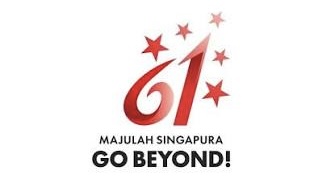
The theme for this year’s National Day celebrations is Majulah Singapura, Go Beyond!
The National Day Parade website explains the meaning of the theme and logo:
“Majulah Singapura captures our Singapore spirit i.e. our enduring aspirations to keep moving forward and progress.
Go Beyond is our call to action to do better for Singapore and Singaporeans, and to show care and concern for one another and our wider community.
The 61 graphic represents 61 years of independence with the forward leaning ‘1’ shaped as an arrow, a visualisation of our constant striving for progress and excellence.
The Five Stars arranged in an ascending arc, represent our nation’s ideals of democracy, peace, progress, justice, and equality and serve as the guiding force behind our collective progress.”
How can we celebrate National Day with both patriotic joy and spiritual depth, especially in a year where long-standing norms regarding the sovereignty of nations are increasingly eroded and the respect of human rights appear more fragile and threatened than ever?
Gratitude
“First of all, then, I urge that supplications, prayers, intercessions, and thanksgivings be made for all men, for kings and all who are in high positions, that we may lead a quiet and peaceable life, godly and respectful in every way.”
Every National Day, we ought always to thank God – the source of all good gifts (James 1:17) – for the blessings of free will, for good leadership and governance, and the Constitutional and civic freedoms we enjoy today in our country, especially our freedom of worship.
Yet we should never forget that true liberty, according to the social teachings of the Catholic Church, is always ordered toward something higher than mere personal autonomy or national sovereignty.
Freedom
As Pope St John Paul II taught in a 1995 homily:
“Every generation needs to know that freedom consists not in doing what we like, but in having the right to do what we ought.”
Many people, in asserting their freedom to do what they like, forget that:
“In human society one man’s natural right gives rise to a corresponding duty in other men; the duty, that is, of recognising and respecting that right… To claim one’s rights and ignore one’s duties, or only half fulfill them, is like building a house with one hand and tearing it down with the other.”
This is why a woman must respect her unborn child’s inalienable and inviolable right to life.
As Catholics, we believe that Jesus saved us and set us free to love God and others as He loved us, and to participate in working for the common good of all persons i.e. the overall welfare of society. Thus, our spiritual freedom is for virtue and service and not merely a personal freedom from constraint, which risks being a freedom of indifference to others.
Scripture reminds us:
“For you were called to freedom, brothers. Only do not use your freedom as an opportunity for the flesh, but through love be servants of one another.”
Democracy and Progress
In Catholic social teaching, progress is understood as much more than just measuring quantitative economic growth or technological advancement.
In the eyes of the Church, genuine progress is gauged by the qualitative improvements in human life and relationships, and how much a human person is able to realise his or her potential to the fullest, and contribute to society. Progress moves beyond valuing efficiency and productivity towards treasuring greater authentic communication and dialogue, the sharing of knowledge and culture, mutual service and support, and collaborative efforts to strive together in solidarity for the individual person and all persons.
To this end, Pope St John Paul II, in his same 1995 homily, said:
“The basic question before a democratic society is: ‘how ought we to live together?’”
Again, we are reminded that we ought to exercise our free will and freedom to live together as one human family in fraternity and social friendship so our society might flourish in our unity and diversity. As Pope Francis wrote in his 2020 Encyclical Fratelli tutti (Brothers all):
“No one can face life in isolation… We need a community that supports and helps us, in which we can help one another to keep looking ahead. How important it is to dream together… By ourselves, we risk seeing mirages, things that are not there. Dreams, on the other hand, are built together.”
So it is with The Singapore Dream: aiming high, going beyond – together.
Peace, Justice and Equality
The Church teaches that every person has equal dignity as a child of God created in His own image and likeness (The Catechism of the Catholic Church, CCC 1700).
Because of this shared dignity and common origin, humanity is called to live together in solidarity. This requires a firm and persevering determination to commit oneself to the common good of all and of each individual, recognising that we are all responsible for one another (CCC 1939).
Equality and solidarity involve acting justly towards others.
“Justice is the moral virtue that consists in the constant and firm will to give their due to God and neighbour.”
In his 2024 catechesis on the virtues, Pope Francis explained the purpose of justice: to ensure that “in society, everyone is treated in accordance with the dignity proper to them.” It is “for good co-existence between people,” requiring other virtuous attitudes such as “benevolence, respect, gratitude, affability, and honesty.” He famously said, “Without justice, there is no peace. Indeed, if justice is not respected, conflicts arise.”
Justice and peace begin with us. Pope Francis taught:
“The righteous [just] person keeps watch over his own behaviour, so that it is not harmful to others: if he makes a mistake, he apologises. In some situations, he goes so far as to sacrifice a personal good to make it available to the community. He desires an orderly society, where people give lustre to the office they hold, and not the office that gives lustre to people. He abhors recommendations and does not trade favours. He loves responsibility and is exemplary in promoting legality… The righteous person reveres laws and respects them, knowing that they constitute a barrier protecting the defenceless from the tyranny of the powerful. The righteous person does not think only of his own individual well-being, but desires the good of society as a whole. Therefore, he does not give in to the temptation to think only of himself and of taking care of his own affairs, however legitimate they may be, as if they were the only thing that exists in the world… Indeed, this is the way of justice, the antidote to corruption: how important it is to educate people, especially the young, in the culture of legality!”
Celebrating National Day
This year August 9 falls on a Sunday.
Even as we enjoy our earthly public holiday, let us not forget to praise God for calling us, despite our imperfections, to be His ambassadors for Christ (2 Corinthians 5:20), remembering that ultimately, our citizenship is in heaven (Philippians 3:20).
Here are some ways we can celebrate National Day with our families:
-
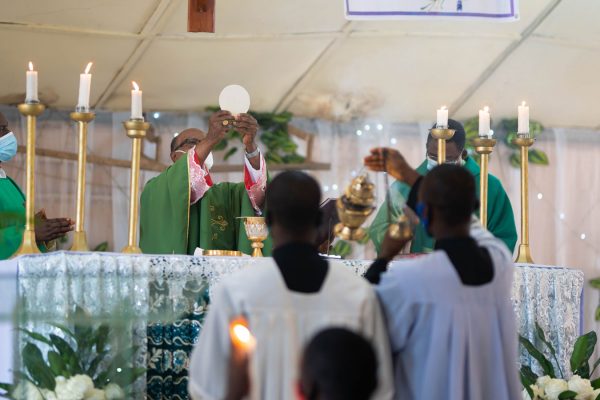
Attend Mass
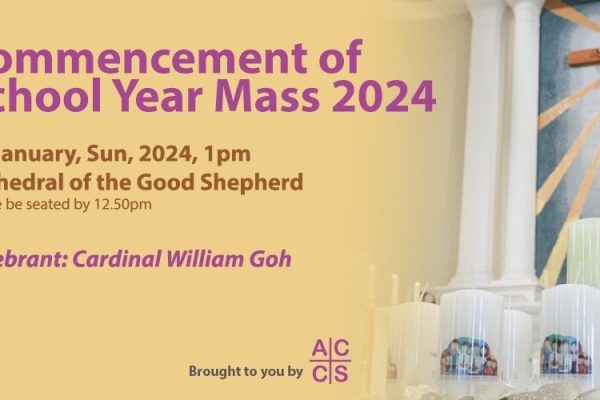
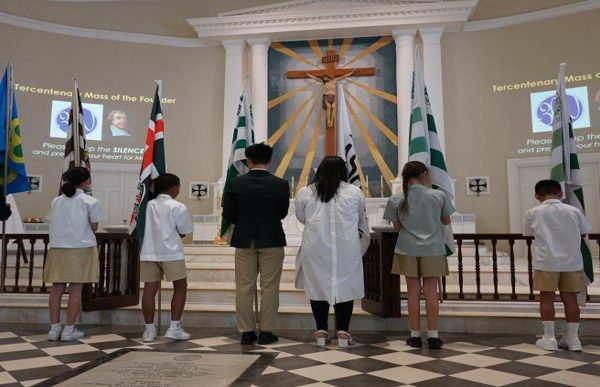
SG61 falls on the 19th Sunday of Ordinary Time. It offers us an opportunity to centre our celebrations on God, who is the source of all good gifts (James 1:1), wholeheartedly offer up our gratitude for the fundamental liberties guaranteed us in the Constitution, especially our right to profess and practise our Catholic faith, and intercede for our leaders and people so that all might continue to uphold the peace and justice we enjoy now in our nation.
Let us resolve to do our part, no matter how small, for genuine progress, always remembering our place and vulnerability in a world where sovereignty and human rights are nowadays often disrespected.
-
Intercede for our Nation
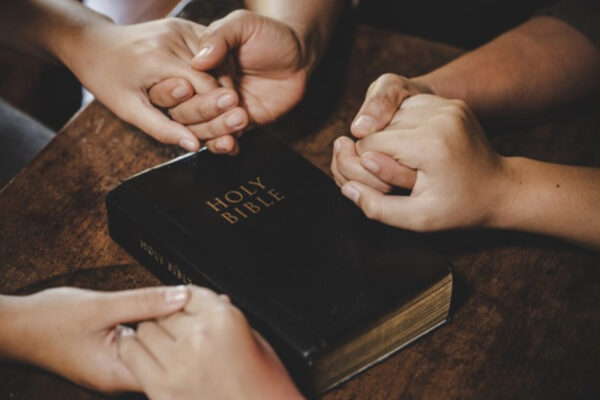
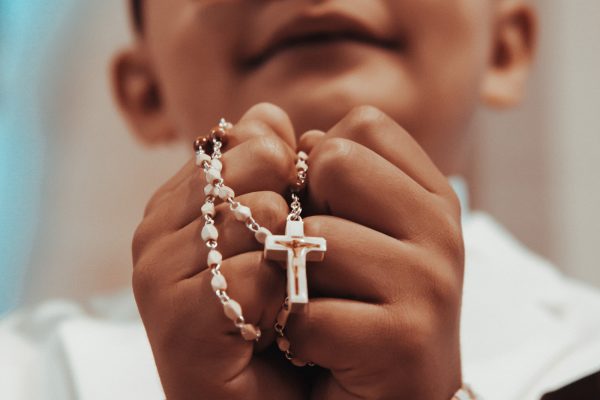
Let us pray the Rosary or a special Novena for our country, our leaders, civil authorities and for the well-being of our country, and for all the people of Singapore, citizens, residents and visitors alike.
We could also lift up the Pope’s Prayer Intention for August 2026 – very apt for our city state – For evangelisation in the city: Let us pray that in large cities often marked by anonymity and loneliness, we find new ways to proclaim the Gospel, discovering creative paths to build community.
-
Reflect on Freedom and Responsibility
How are we using our God-given freedom responsibly to serve our Lord and our neighbour, to uphold human dignity, and to contribute to the common good, whether at home, in the workplace and our places of worship?
-
Just celebrate!
Attending the National Day Parade or watching it online, participating in heartland celebrations around the country, and enjoying the long weekend together as a family or faith community can all be done with a spirit of joy and thanksgiving. Let us also reflect how we might engage those who are less fortunate or who are unable to celebrate for whatever reason.
If we are faithful and committed Catholics, centred on God and His Word in Sacred Scripture, and the wisdom of the teachings of the Magisterium, the successors of the first apostles, we will automatically be good and responsible citizens of Singapore as well.
Majulah, Singapura! Let us “Go Beyond”!
Blessed National Day!